

<img src="https://secure.leadforensics.com/85165.png" alt="" style="display:none;">
Skip to content
Everything your engagement programme runs on, in one system, from register to report.
Every feature, mapped to how a South African participation process actually runs.
Log grievances, track issues and commitments, and report them by type.
ISO 27001, Cyber Essentials Plus, and a straight answer on POPIA, hosting and cross-border transfer.
Run comment windows and surveys, with every response held against the person who made it.
150+ pre-built reports and dashboards, including the comments and responses report.
A named Client Success Manager, unlimited support, and a four to six week implementation.
Map interested and affected parties against the categories the law actually names.
The public side of the process: documents, comments and self-registration, priced separately.
 dropdown-demo-2 
Learn why leading organisations trust Tractivity.
Social and labour plan consultation, mine communities, traditional councils, informal rights.
IDP and budget participation, ward committees, and the duty to report back.
Licence participation and a register you keep during processing and for two years after.
Transmission corridors, renewables and community trusts, across project lives measured in decades.
Corridor-scale engagement across rail, ports and third-party network access.
Run every client project from one system, with the evidence pack ready when the authority asks.
The EIA Regulations mapped to the system, from first notice to comments and responses report.
Notice, representations and reasons, recorded well enough to survive a PAJA review.
 dropdown-demo-2 
Learn why leading organisations trust Tractivity.
Read our customer success stories and discover how our clients are delivering impact with Tractivity.
The step-by-step guide to building an effective stakeholder engagement plan, with template.
Views and insights from engagement experts, recorded at our events and free to watch.
Helpful tips, guides and articles about stakeholder engagement, project management and more.
Learn how to identify, categorise and prioritise your stakeholders with our complete guide.
Empower sustainable engagement with AccountAbility's framework and Tractivity's system.
Free guides, whitepapers, templates and more to help you deliver sustainable outcomes.
Understand your stakeholders' needs, interests and influence with our practical framework.
What POPIA means for a register of interested and affected parties, answered in full.
 dropdown-demo-2 
Learn why leading organisations trust Tractivity.
Rate your organisation across five categories in minutes and get an instant, tailored score.
Calculate the time your team loses to manual admin into a defensible number for the board.
What POPIA means for a register of interested and affected parties, answered in full.
A six-part toolkit for planning, running and documenting your stakeholder engagement.
The legal test for fair public participation, and a self-audit to find where yours is weak.
Free, practical resources for managing engagement and running public participation well.
You’re the expert. We’re the software, and the home of stakeholder engagement.
dropdown-demo-2
Learn why leading organisations trust Tractivity.
Our annual Stakeholder Engagement Day, held in the United Kingdom and open to anyone working in engagement.
The 2026 event is coming soon. Held in the United Kingdom, with sessions worth watching wherever you are.
Talks and presentations from the 2025 event, free to watch online.
Keynotes and real-world case studies from the 2024 summit, online.
Sessions and insights from our first live event, online.

When the decision is reviewable, the record is the defence

National departments, provincial competent authorities and regulators rarely lose reviews on the merits. They lose them on procedure. Section 6(2)(b) of the Promotion of Administrative Justice Act makes a missed mandatory step a ground of review on its own.

The answer is a record: who was notified, when, what they said, what was decided and what they were told about challenging it, produced in full on the day it is asked for.

View our case studies
Book a demo
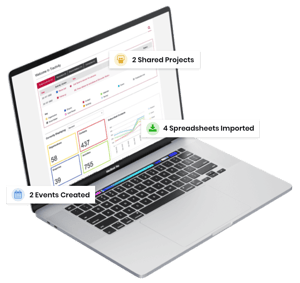
The Tractivity platform shown on a desktop computer

Trusted by public bodies, utilities and infrastructure programmes in the UK and beyond

Who is this for?

National departments running notice, comment and authorisation processes:

  • Forestry, Fisheries and the Environment
  • Mineral and Petroleum Resources
  • Water and Sanitation
  • Electricity and Energy
  • Cooperative Governance and Traditional Affairs
  • Public Works and Infrastructure, with Infrastructure South Africa
  • Transport

This also covers the nine provincial competent authorities that decide environmental authorisation applications. Their names change with each administration, so they're best held as a maintained lookup rather than typed into a free text field.

Energy industry build a picture of stakeholders

Regulators that run statutory notice, comment and hearings: NERSA under the Electricity Regulation Act, the National Nuclear Regulator under section 21 of its Act, the Transport Economic Regulator under the Economic Regulation of Transport Act, and the Information Regulator.

State owned enterprises carrying the same procedural duties in practice, whether or not they are organs of state for every purpose. Local government sits on its own page: municipalities and metros covers the Municipal Systems Act, the MFMA, and the IDP and budget cycle.


Explore the features
Electricity transmission pylons across open South African veld

Why reviews are lost on procedure

A department runs notice and comment. Notices go out from three different inboxes. Representations arrive by email, by post, through a portal and in person at a hearing. The register of who was notified lives in one spreadsheet, the log of what came back lives in another, and the official who maintained both has moved posts.

Eleven months later, a review application lands, or a request under the Promotion of Access to Information Act does. The question is not whether the decision was reasonable, it is whether adequate notice was given, to whom, and what was done with what came back. At that point the file either exists or it does not, and reconstructing it is how a defensible decision becomes an indefensible one.

PAJA, and what a defensible record looks like

  • Section 3 requires adequate notice of the nature and purpose of the proposed action, a reasonable opportunity to make representations, a clear statement of the action, and notice of review or appeal rights and of the right to reasons. Each of those is a record.
  • Section 4 applies where the action affects the public. A public inquiry, a notice and comment procedure, both, or another fair procedure: whichever is chosen has to be followed. Choosing notice and comment and then running an inquiry-shaped process badly is the failure mode section 6(2)(b) catches.
  • Section 5 gives a person 90 days to ask for written reasons and the administrator 90 days to give them. Reasons written eleven months after the fact, from an incomplete file, are how a department ends up conceding.
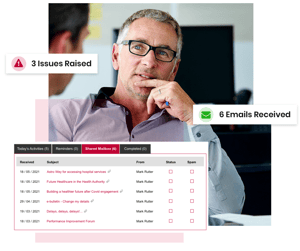
The Tractivity platform shown on a desktop computer
In Tractivity, each of those steps is an object with a date and an owner: the notice as a communication saved against every recipient, the representation as a comment held against the person or organisation that made it, the response and the decision as tracked items. There is no assembling stage, because there is nothing to assemble. The same record runs the public participation process it came from.

PAIA, and what a request actually reaches

Under the Promotion of Access to Information Act, a public body has 30 days to respond to a request, extendable by 30 days. Grounds of refusal include third-party privacy and confidential commercial information, and section 46 carries a public interest override.

The point departments underestimate is scope. Engagement records held by a public body are potentially requestable: attendance registers, minutes, comment logs, grievance files and internal notes about named individuals. A free text note written in frustration about a named objector is a record, and it may be one the requester is entitled to.

That makes field level classification a requirement rather than a refinement. Internal assessment should sit in a field that can be identified and weighed against the exemptions, not scattered through a general notes box that has to be redacted line by line against a deadline.
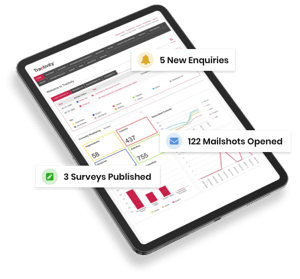

The Tractivity platform shown on a desktop computer

Every step is evidenced as it happens

Each of the eight areas below is a step PAJA, PAIA or POPIA requires, and the record that evidences it is held on the platform rather than in a separate spreadsheet or inbox.

Adequate notice and proof of it

Section 3(2)(b)(i) requires adequate notice of the nature and purpose of the proposed action. A notice here is a communication saved against every recipient, with the date, the channel and the content that went out, so who was notified and when is a report rather than an archaeology exercise.

A reasonable opportunity to make representations

Section 3(2)(b)(ii). The window has an opening and a closing date, and every representation is held against the person or organisation that made it, whether it arrived by email, by post, through a portal or at a hearing. A late submission is recorded as late rather than quietly dropped.

A clear statement of the administrative action

Section 3(2)(b)(iii). What was decided, in what terms, and what was published to whom, held as a tracked item with a date and an owner and linked to the representations it answers.

Notice of review, appeal and the right to reasons

Section 3(2)(b)(iv) and (v) require the person to be told how to challenge the decision and that they may ask for reasons. It is the step most often skipped and the easiest to evidence, because it belongs in the communication template that goes to everyone on the list.

Choosing a procedure under section 4 and running it

Where the action affects the public, section 4 lets the administrator hold a public inquiry, follow a notice and comment procedure, do both, or follow another fair procedure. The record shows which was chosen, when that was decided, and what each step produced.

Written reasons within 90 days

Section 5 gives a person 90 days to request written reasons and the administrator 90 days to provide them. Reasons drafted from a complete file are a day's work. Reasons reconstructed from an incomplete one are a concession waiting to happen.

A PAIA request answered within 30 days

30 days, extendable by 30 days. Attendance registers, comment logs, grievance files and internal notes about named individuals are all potentially requestable, so internal assessment sits in an identified field that can be weighed against the exemptions, not in a general notes box redacted line by line at speed.

The 180 days the file has to survive

Section 6(2)(b) makes non-compliance with a mandatory and material procedure a ground of review on its own, and a review must be brought within 180 days. The file has to be complete and unchanged across that window, including where the officials who built it have moved on.

Languages, hosting and supplier status

Section 4 of the Use of Official Languages Act requires every national department, public entity and public enterprise to adopt a policy naming at least three official languages, and section 9 requires an annual report on it to the Minister and PanSALB. The platform interface is English. What the Act requires is multilingual output, and documents, notices and comment forms can be published in more than one language. Be precise about that distinction in a tender, because the two are often conflated and only one of them is something we can deliver.

On hosting, the platform runs on Microsoft Azure with the United Kingdom as the default region and other regions available. POPIA does not require local hosting, but the National Policy on Data and Cloud and most public sector tenders increasingly ask about residency, so raise it early rather than at contract stage. We are not on the Central Supplier Database and we hold no B-BBEE recognition level, which we state plainly on our pricing and contact pages.

What procurement checks before they sign

icon-security

The register without consent

Consent is the wrong lawful basis for a statutory register and it collapses the first time an objector withdraws it. A statutory process rests on section 11(1)(c) of POPIA, a legal obligation, or section 11(1)(e), a public law duty. What does bite is the content: special personal information under sections 26 to 33 is prohibited by default and includes race or ethnic origin, political persuasion and trade union membership, all three of which South African engagement practice routinely records.

icon-whatsnew

Implementation in four to six weeks

Four to six weeks on average from contract signed to launch, covering planning calls, system set-up, configuration, data import, checks and end-user training, with a minimum of 20 hours of onboarding and two 1.5-hour training sessions with a dedicated Client Success Manager. How long it actually takes depends as much on how quickly your data is supplied as on us.

icon-duplicate-prevention1

Accreditations and independent testing

ISO 27001:2022, Cyber Essentials Plus and a UK G-Cloud listing. Hosted on Microsoft Azure with encryption at rest and in transit, independently penetration tested every year by a CREST-approved organisation, and a 99.95 per cent uptime guarantee with 24/7/365 monitoring.

icon-ai-detection2

Role-based permissions by project, module and record

Permissions are not all or nothing. A regional office sees its own province; a case officer sees the projects they are assigned to; and internal assessment sits in fields that can be restricted and identified, which is what makes a PAIA request answerable within 30 days without a line-by-line redaction exercise.

National and provincial government, answered

Is this the same as the municipalities page?

No. That page covers local government under the Municipal Systems Act and the MFMA, including the IDP and budget cycle. This page covers national departments, provincial competent authorities, regulators and state owned enterprises.

Can it hold a notice and comment process under PAJA section 4?

Yes. Notices are saved against every recipient, representations are held against the person or organisation that made them, and decisions and reasons are tracked items with dates and owners.

What happens when a PAIA request arrives?

Engagement records held by a public body are potentially requestable, including internal notes about named individuals. Field level classification is what makes a request answerable inside the 30 day window without a line by line redaction exercise.

Do we need consent to hold a stakeholder register?

No, and consent is the wrong basis. A statutory register rests on section 11(1)(c) or section 11(1)(e) of POPIA. A consent-based register collapses the first time an objector withdraws consent.

Can the data be hosted in South Africa?

The platform runs on Microsoft Azure, United Kingdom region by default, with other regions available. POPIA does not require local hosting, but the National Policy on Data and Cloud and most public sector tenders increasingly ask about it. Raise residency early and we will answer in writing.

Are you on the Central Supplier Database?

Not yet, and we hold no B-BBEE recognition level. Both are stated plainly on our pricing and contact pages rather than left for bid stage.

Does the system support multiple official languages?

Documents, notices and comment forms can be published in more than one language. The interface itself is English. That distinction is what section 4 of the Use of Official Languages Act actually requires.

Start with the process you have to defend

Bring one process: a notice and comment round, an authorisation decision or a hearing that has to survive a review. We will show you how the notice, the representations, the responses, the decision and the reasons are held as one record, and what comes out of it when a section 5 request or a PAIA request arrives.

Worth reading next: POPIA and stakeholder data, and our security and compliance position, including the operator questions we have not finished settling.

Book a personalised demonstration

No demo script. We will use your process, your dates and the decision you have to be able to defend.
Book a demo