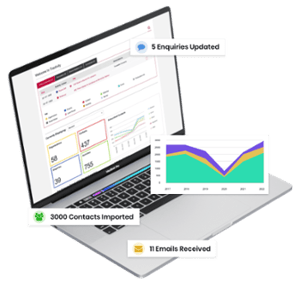


Public participation software for environmental consultancies
Twelve live projects, nine clients, four authorisation types and one person who knows where the registers are. Tractivity gives consultancies one system for I&AP registers, notices, comments and evidence packs, with clean separation between clients and a record you can hand over.


Used in South Africa by Lesedi Nuclear Services, and by energy, water and public sector programmes across the UK and beyond












The record is the deliverable, and it is also your professional exposure
Public participation is one of the few consultancy service lines where the output is not a report, it is an evidence pack. And since 8 August 2022, the person who signs it off is an Environmental Assessment Practitioner (EAP) registered with EAPASA, with a personal obligation attached.
Regulation 13 of the 2014 EIA Regulations requires the EAP to be independent and competent, to perform objectively even where that produces findings unfavourable to the proponent, and to disclose to the proponent, registered interested and affected parties (I&APs) and the competent authority all material information that may influence a decision or the objectivity of any report. EAPASA operates a Code of Ethical Conduct and Practice behind that. When a process is challenged under the Promotion of Administrative Justice Act (PAJA), the defence is documentary, and the documents are the ones the practice produced.

It is not a competence problem, it is a systems problem
Meanwhile the practice is running twelve projects for nine clients across EIAs, water use licence applications, SLP rounds and SPLUMA applications, each with a different notice programme, a different comment period and a different retention rule.
The register for project four lives in a workbook on somebody’s laptop. The proof of service for project seven is in an email folder. The minutes for project nine were taken on paper. And a client has just asked for their register back because they are changing consultants.
None of that is a competence problem. It is a systems problem, and it is the one thing in the practice that nobody has time to fix.

Four authorisation types, four sets of rules
- EIA: public participation under Regulations 39 to 44 of the NEMA EIA Regulations, with their own registration and comment periods
- Water use licence: under Regulations 17 to 19, with a register kept two years past licence issue
- Social and Labour Plan: under the MPRDA Regulations, with the approved SLP published in English and one other local language within 30 days (Regulation 46A)
- SPLUMA land development: with notice periods set by municipal by-law
Built for multi-client public participation
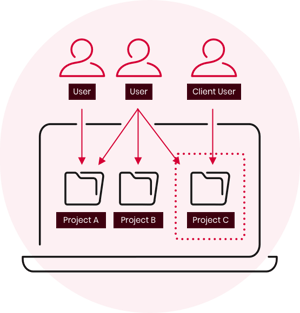
One system for the whole EAP practice portfolio, with each client walled off from the next, and a record that leaves with the mandate rather than with the person who happened to be running it.
Clean separation, portfolio-wide visibility
Role-based permissions at project, module and record level, so each client’s data is walled off while the practice can still report across its portfolio: live comment periods, overdue responses, participation volumes, issues by client. No caps on stakeholder records, communications sent or engagements captured.
Every authorisation type, one record structure
Notice requirements, comment periods and retention rules held as project settings rather than hard-coded assumptions, so an EIA under Regulations 39 to 44, a water use licence application under Regulations 17 to 19, an SLP consultation under the MPRDA Regulations and a SPLUMA land development application can all run in the same system without any of them being a workaround. See how our public participation software for South Africa works.
The evidence pack assembled as you go
Site notice photographs, newspaper tear-sheets, proof of service per recipient, attendance registers, minutes, written comments, the comments and responses report, and the Screening Tool and Site Sensitivity Verification reports, all attached to the project and to the parties they relate to. What used to be a fortnight of collating becomes a set of exports.
Handover that is actually a handover
When a mandate ends, export the register, the correspondence, the comments and responses report and the full audit trail to Word, Excel and PDF. A client changing consultants should receive a record, not a folder structure.
Registration routes that match how parties register
Written requests, comment forms, attendance registers, bulk Excel uploads, an API where a project website feeds the register directly, and Engage-360, our branded public portal where I&APs self-register and respond, a separately priced module worth discussing if you run large participation programmes.
Multiple languages tracked
Notices, Background Information Documents, comment forms and executive summaries are held in multiple language versions against one record, with the version each party received tracked. The DFFE Public Participation Guideline (2017) requires local-language radio announcements and, on request, regional-language executive summaries, and MPRDA Regulation 46A requires the approved SLP in two languages within 30 days.
Protecting the practitioner
Everything date-stamped, everything attributed, nothing overwritten without a trace. Spreadsheets are uncontrolled by default, which means a stakeholder comment can be altered or deleted without any record that it existed. A University of Hawaii study found that 94% of the spreadsheets audited contained at least one error. On a document you sign your registration against, that is not a productivity issue. Every action is logged against the person who took it, so when a regulator, a client or an incoming consultant asks who changed what and when, the answer already exists.
Pricing and implementation for a practice
The base licence is £9,495 a year plus £500 per additional user (quoted in pounds sterling), with no caps on stakeholder records, communications sent or engagements captured, and no per-user feature gates inside the platform. The Engage-360 public portal is a separately priced module, configured to the scale and customisation your participation programmes need.
Implementation runs four to six weeks on average from contract signed to launch, covering planning calls, system set-up, configuration, data import, checks and end-user training, with a minimum of 20 hours of onboarding and two 1.5-hour training sessions with a dedicated Client Success Manager. How long it actually takes depends as much on how quickly your data is supplied as on us.
Stakeholder data is handled in line with POPIA and hosted on Microsoft Azure, in the UK by default.
Questions practices ask
Since 8 August 2022, only a registered Environmental Assessment Practitioner may hold primary responsibility for planning, managing, coordinating or reviewing an environmental impact assessment. EAPASA is appointed under section 24H(3) of the National Environmental Management Act as the single statutory registration authority, operating a Code of Ethical Conduct and Practice, a Candidate EAP tier, and since August 2024 an Environmental Control Practitioner designation, approved by SAQA, covering post-decision compliance monitoring.
The register of interested and affected parties, dated photographs proving the site notice, newspaper tear-sheets, proof of service for every written notice, attendance registers, minutes of every meeting, every written comment received, the comments and responses report, and the Screening Tool and Site Sensitivity Verification reports. Regulation 13 also requires the practitioner to be independent and competent and to disclose to the proponent, registered I&APs and the competent authority all material information that may influence a decision or the objectivity of any report.
Yes. Tractivity applies role-based permissions at project, module and record level, so each client’s data is separated while the practice can still report across its portfolio. There are no caps on stakeholder records, communications sent or engagements captured, and records export to Word, Excel and PDF for handover at the end of a mandate.
Yes. The record structures are the same across authorisations: a register of interested and affected parties, notices with proof of service, comments with responses, meeting minutes and commitments. The differences are the notice requirements, the comment periods and the retention rules, and those are held as project settings rather than hard-coded, so an EIA, a water use licence application, an SLP round and a SPLUMA application can run alongside each other.
Stakeholder data is hosted on Microsoft Azure in UK data centres by default, with alternative hosting regions available on request. It is encrypted in transit and at rest, backed up daily, and protected under an ISO 27001:2022-certified information security management system with Cyber Essentials Plus. Under POPIA, your practice remains the responsible party and Tractivity acts as operator, processing personal information only on your instructions under a written agreement. Role-based permissions, consent and communication preferences recorded against each stakeholder, and a full audit trail help you meet POPIA's conditions for lawful processing, including the rules on cross-border transfers under section 72.
We quote in pounds sterling and there is no rand price list today. If invoicing in rand matters for your procurement, say so when you get in touch and we will tell you what is possible.
Run the meeting the way you already do, with paper attendance registers and comment forms, then bring everything into Tractivity once you are back online. Attendees and comments can be added individually or in bulk by Excel upload, and scanned registers, minutes and photographs are attached to the meeting record. Every entry is date-stamped and attributed, so the evidence pack shows who attended, what they said and when it was captured.
Bring us your busiest project
Not a demo script. Take the project with the biggest register and the messiest evidence trail, and we will walk through what it looks like in the system.
Worth reading next: public participation software for South Africa, stakeholder engagement for mining, and POPIA and your stakeholder database.