


Stakeholder engagement software for water in South Africa
South Africa's water use licence regulations require a register of interested and affected parties, kept for two years after the licence is issued, and a public participation report with every comment, every objection and the record of every meeting. Tractivity holds all of it in one system for water boards, municipalities, catchment management agencies and the teams preparing licence applications.
Used in the UK by Anglian Water, Severn Trent Water and Southern Water.


Trusted by water and utility organisations delivering essential services









- Water use licence
- Bulk infrastructure
- Catchment forums and water users
One record, from pre-application to the Regulation 19 report
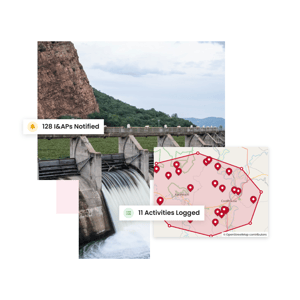
Open the register at pre-application and log every notice, comment, objection and meeting against the right party from day one. When comments close, the Regulation 19 report comes out as an export rather than a fortnight of collating.
- 60 days maximum from the last publication to the closing date for comments and objections, under Regulation 17
- 2 years after the licence is granted, the register must still be kept, under Regulation 18
- 30 days to lodge a notice of intention to appeal with the Minister, who then has 90 days to decide, under Regulations 22 and 23
One programme record, through planning, construction and operation
Pipelines, treatment works and augmentation schemes carry their own EIA public participation, their own landowner negotiations and their own construction-phase complaints. Hold the scheme as a programme with the applications, the consultations and the affected parties beneath it, so the register survives the handover from planning to construction to operation.
That continuity matters as much when the institutions around a scheme change as when its own phases do.
- 7 water boards now provide bulk water services, down from nine after the 2023 reconfiguration. Records held at programme level survive that kind of change in a way board-level records don't.
- One programme record holding the licence, the EIA and construction-phase complaints for each scheme

Standing bodies, not one-off contacts
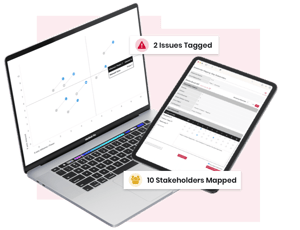
Catchment management agencies, water user associations, catchment forums, irrigation boards and municipal bulk customers are standing bodies, not one-off contacts on a project list. Hold them as organisations with their own membership, meeting schedules, attendance and engagement history, so the relationship has a record between processes as well as during them.
- Membership, meetings and attendance held against the organisation
- One register shared across every process the body takes part in


One register, from pre-application to the appeal window and beyond
The register, with the retention rule attached. Every interested and affected party held against the application and the scheme, with how they registered recorded as a field. Retention set per record type, so the two-year tail on a licence register is a system rule rather than somebody’s diary note.
The Regulation 17 notice programme is evidenced. Notice board logged with the dated photograph attached. Written notices sent from the platform and saved against every recipient, so proof of service exists per party. Newspaper and Gazette publications logged with the tear-sheet and the date, and the comment closing date calculated from the last publication.
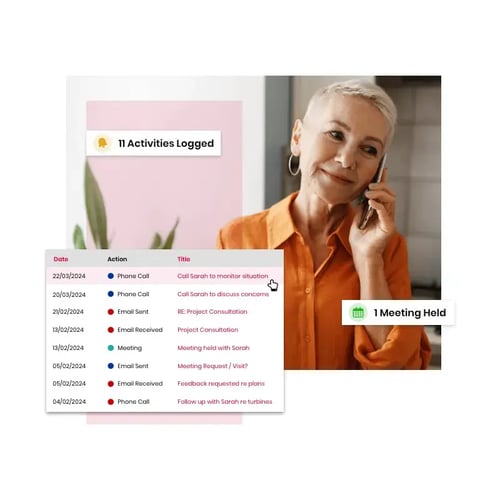
Comments, objections and the public participation report. Every comment and objection logged against the party, the issue and the report it relates to, with the response and who gave it. Meeting invitations, attendance registers and minutes attached to the parties who attended. Then the Regulation 19 public participation report, as an export.
Anglian Water
Anglian Water serves more than six million customers across the East of England and is delivering a £10bn investment programme over five years. Tractivity holds engagement with more than 13,000 stakeholders across day-to-day operations and major infrastructure programmes, including the Cambridge Wastewater Treatment Plant Relocation, a Nationally Significant Infrastructure Project. Engagement evidence is ready on demand for the regulator and during live operational incidents.


Tractivity plays a key role in ensuring that our stakeholders are informed and involved. We use it extensively to communicate our investments through proactive outreach, allowing us to share positive stories and updates with stakeholders. It also helps us with statutory obligations; if something happens and we are regulated to talk to our stakeholders about that, using Tractivity we capture the engagement, run the stats and numbers, and that becomes evidence for us to give to the regulator.
Start with your next licence application
Bring us the application you're preparing, or the one whose register you still have to keep for another 18 months, and we'll show you what it looks like when the system holds it.
Worth reading next: public participation software for South Africa, public participation software for municipalities, and POPIA and your stakeholder database.
Book a demonstration
Against your own application and your own register. No demo script.