


Stakeholder engagement software features
A feature list is only useful if you can map it to what you actually have to produce. This page runs in the order a South African participation process runs, from the register of interested and affected parties through to the comments and responses report, so you can check off what your process needs rather than read a specification.
Tractivity has been built for regulated engagement since 2002, and supports 100+ clients across ten sectors, including energy and utilities, transport and government.
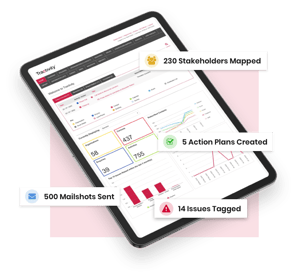

Stakeholder mapping in South Africa
Map interested and affected parties against the categories Regulation 41 and the MPRDA Regulations actually name. See how mapping works in South Africa.

Strategy plans
Plan your entire engagement strategy with objectives to monitor and achieve. Add as many objectives as needed, assign users to be responsible, start and end dates, the status of completion, attach documents and even link them to an event, survey or mailshot.

Engage-360 public portal
Engage-360 is the public-facing portal, carrying your branding and sitting alongside the platform. Stakeholders can read project information, comment, take part in surveys, register for events and raise grievances. Everything they submit is captured in Tractivity against their record, so you can respond and report on it.

Engagements history
Track, save and share a complete history of every stakeholder interaction, from telephone calls and meeting notes to events and campaigns. Attach supporting documents to any record, from paper-copy surveys and photos to site visit reports, so all your evidence sits in one place. Engagements are displayed in date order and fully exportable.

Communication campaigns
Target your stakeholders with newsletter campaigns that are on brand and inform your audience about your consultations, projects and events. Choose to reach stakeholders by location or category-based filters and deliver unlimited and personalised emails with open and click tracking.

Surveys and forms
Build surveys and forms with a range of question types and logic, from comment forms to event registrations and newsletter sign-ups. Email them to a panel of stakeholders, target people by location, publish them on your engagement portal for the whole community, or embed them on your own website and social media without IT involvement. Every response is captured against the person or organisation who submitted it, with pre-built reports ready to use.

Events
Set up public meetings and events, invite stakeholders and promote them through the Engage-360 portal, your website or social media. Registrations and attendance are recorded against each person, which matters because attending a meeting is one of the things that puts someone on the register under Regulation 42. Fully integrated with Microsoft Teams.

Commitment tracking
Keep every commitment made to stakeholders in one place. Log promises from any meeting, letter or response, assign an owner and a deadline, link them to the people and locations affected, and track status and risk. Every commitment is visible and auditable, from the day it was made to the day it was closed.

Feedback and issues
Capture feedback from every channel, analyse sentiment and tag the issues it raises, so you can see which concerns are growing, where and among whom. Report on the issues affecting each group of stakeholders and show how they shaped your response.

Land parcels with Google Maps
Draw custom locations in Google Maps or add postal codes, then segment your communications and analyse survey responses, issues and sentiment by area.

POPIA and consent management
Record each stakeholder's consent and subscription preferences, with opt-in capture and unsubscribe tracking. Statutory notices and marketing emails are kept separate, so people who opt out of newsletters still receive the notices the law requires.
Feedback and grievance management
For lender-financed projects, a grievance mechanism is a requirement, not a courtesy. IFC Performance Standard 1 requires a grievance mechanism for affected communities that is readily accessible, at no cost and without retribution. Equator Principle 6 requires a grievance mechanism, and Principle 8 makes compliance a loan covenant. Absa, FirstRand, Nedbank and Standard Bank are all Equator Principles signatories. GRI 2-25 and 2-26 make remediation and grievance mechanisms reporting disclosures, and core metric G3.1c of the JSE Sustainability Disclosure Guidance asks listed companies to describe their grievance mechanisms and how much they have been used. The South African Human Rights Commission, in its national hearing report on mining-affected communities, found an immediate need for effective complaints mechanisms by mining companies, the Department of Mineral Resources and local government.
In Tractivity, a grievance is a tracked item with an owner, a status, a due date and a full history, recorded against the person or organisation that raised it. The enquiries module handles grievances, complaints, project feedback and PAIA requests together, date-stamped and categorised by project phase, issue, source and sentiment. All of it can be counted, aged and reported by type, which is what these disclosures ask for.
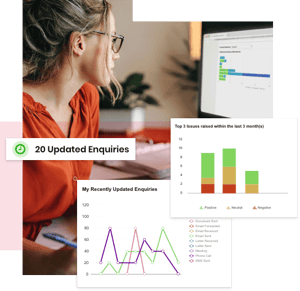

Custom reports and AI survey analysis
Filter and customise the pre-built data tables, matrix reports and charts, or create, save and export your own from any module. Our team can also build bespoke reports on request. For surveys, Tractivity summarises and categorises open-text responses, so the main themes are clear before you start drafting responses.

Dashboards and Power BI
Interactive dashboards show key metrics, project progress and trends over time, from engagement levels to the number of comments still awaiting a response. Microsoft Power BI can be used today through scheduled CSV exports to a location you choose.

Comments and responses report
Every comment is linked to the person who made it, the date and channel it arrived through, and the response you gave. The comments and responses report pulls that together by issue or by stakeholder, ready to attach to the reports you submit to the competent authority.
Data security and POPIA
Tractivity is certified to ISO 27001:2022 and Cyber Essentials Plus, the UK government-backed security certification, and runs on Microsoft Azure. The platform has 24/7/365 monitoring, a web application firewall, intrusion detection, regular vulnerability scanning, and file and patch integrity monitoring. Encrypted backups run daily, are kept for 30 days and are tested weekly, and we commit to 99.95% uptime.
Data is hosted in the United Kingdom by default, and other regions are available. POPIA does not require data to be hosted in South Africa, but the National Policy on Data and Cloud encourages it, and many public sector and state-owned enterprise tenders now ask for it. If yours does, raise it early. For transfers outside South Africa, section 72 allows data to go to a country with no adequacy decision if it is protected by a binding agreement. That agreement must give substantially similar protection to POPIA, including rules on onward transfer, and we agree it with each client.
Where we hold your stakeholder data, we are the operator and you remain the responsible party. Sections 20 and 21 require that relationship to be set out in a written contract, including a duty to notify you immediately if we suspect a breach. Our full position is on the security and compliance page.
Tractivity integrations
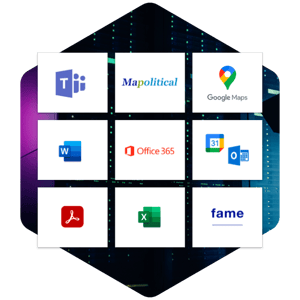
Tractivity connects with the tools your team already uses:
- Microsoft Teams. Create and manage Teams meetings
- Microsoft Outlook. Transfer emails and meetings
- Google Maps. Display stakeholders on maps
- Google Address Lookup. Search for stakeholder addresses
- Email servers (including Office 365). For emails or connecting to a mailbox
- Calendar applications. Add event invitations to your calendar
- Word / Excel / PDF. Generate reports
- API. Create custom integrations with other systems
Customer support and success
Onboarding and configuration run online with a named Client Success Manager who stays with the account. We walk you through setup, help import the register and schedule regular reviews. Support is unlimited: the number of questions you ask is not a commercial matter, and neither is the number of people asking.
Support runs on United Kingdom working hours. South Africa is one hour ahead between late March and late October and two hours ahead for the rest of the year, so support opens mid-morning South African time and runs into the early evening. Implementation runs four to six weeks on average from contract to launch.
Every user gets every feature, with no record caps. The base licence is £9,495 a year plus £500 per additional user, and covers everything described on this page except the Engage-360 public portal. Engage-360 is priced separately, based on the scale, branding and integration needs of your engagement programme.
Tractivity is updated regularly, based on customer feedback and our own development work. Larger feature releases arrive every three to four months, with smaller bug-fix updates in between. Releases are done outside working hours, usually after 7pm UK time (8pm or 9pm in South Africa), and you are told in advance when the system will be unavailable.

Start here
Tell us what you have to evidence and by when. A demonstration run against a live participation process is worth more than a tour of the software, and if you are working to a tender closing date, say so in the first message.
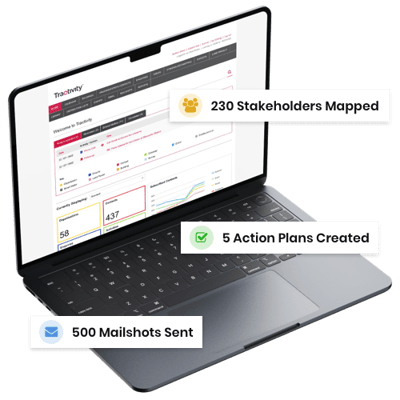
Ready to see Tractivity in action?
From flexible project structures and role-based access to accessible, multi-language outputs, Tractivity adapts to how your organisation works. Book a demonstration and bring a live project so we can show you how it fits.
