


<img src="https://secure.leadforensics.com/85165.png" alt="" style="display:none;">
Skip to content
Everything your engagement programme runs on, in one system, from register to report.
Every feature, mapped to how a South African participation process actually runs.
Log grievances, track issues and commitments, and report them by type.
ISO 27001, Cyber Essentials Plus, and a straight answer on POPIA, hosting and cross-border transfer.
Run comment windows and surveys, with every response held against the person who made it.
150+ pre-built reports and dashboards, including the comments and responses report.
A named Client Success Manager, unlimited support, and a four to six week implementation.
Map interested and affected parties against the categories the law actually names.
The public side of the process: documents, comments and self-registration, priced separately.
 dropdown-demo-2 
Learn why leading organisations trust Tractivity.
Social and labour plan consultation, mine communities, traditional councils, informal rights.
IDP and budget participation, ward committees, and the duty to report back.
Licence participation and a register you keep during processing and for two years after.
Transmission corridors, renewables and community trusts, across project lives measured in decades.
Corridor-scale engagement across rail, ports and third-party network access.
Run every client project from one system, with the evidence pack ready when the authority asks.
The EIA Regulations mapped to the system, from first notice to comments and responses report.
Notice, representations and reasons, recorded well enough to survive a PAJA review.
 dropdown-demo-2 
Learn why leading organisations trust Tractivity.
Read our customer success stories and discover how our clients are delivering impact with Tractivity.
The step-by-step guide to building an effective stakeholder engagement plan, with template.
Views and insights from engagement experts, recorded at our events and free to watch.
Helpful tips, guides and articles about stakeholder engagement, project management and more.
Learn how to identify, categorise and prioritise your stakeholders with our complete guide.
Empower sustainable engagement with AccountAbility's framework and Tractivity's system.
Free guides, whitepapers, templates and more to help you deliver sustainable outcomes.
Understand your stakeholders' needs, interests and influence with our practical framework.
What POPIA means for a register of interested and affected parties, answered in full.
 dropdown-demo-2 
Learn why leading organisations trust Tractivity.
Rate your organisation across five categories in minutes and get an instant, tailored score.
Calculate the time your team loses to manual admin into a defensible number for the board.
What POPIA means for a register of interested and affected parties, answered in full.
A six-part toolkit for planning, running and documenting your stakeholder engagement.
The legal test for fair public participation, and a self-audit to find where yours is weak.
Free, practical resources for managing engagement and running public participation well.
You’re the expert. We’re the software, and the home of stakeholder engagement.
dropdown-demo-2
Learn why leading organisations trust Tractivity.
Our annual Stakeholder Engagement Day, held in the United Kingdom and open to anyone working in engagement.
The 2026 event is coming soon. Held in the United Kingdom, with sessions worth watching wherever you are.
Talks and presentations from the 2025 event, free to watch online.
Keynotes and real-world case studies from the 2024 summit, online.
Sessions and insights from our first live event, online.

Mapping when the list is set by statute

In South Africa the hard question is not who to engage. Regulation 41 and the MPRDA Regulations already tell you. The hard question is proving you reached all of them, and knowing where to put the effort inside a list you cannot shorten.


Book a demo
Download our free guide
Knowledge exchange image

The categories the law names

Regulation 41 of the EIA Regulations requires written notice to occupiers of the site, the owner, adjacent owners and occupiers, the ward councillor, any ratepayers' organisation, the municipality and any organ of state with jurisdiction.

Regulation 42 puts everyone who comments or attends on the register, along with all organs of state with jurisdiction.

Regulation 3A of the MPRDA Regulations, as amended on 27 March 2020, expanded interested and affected persons to include mine communities, landowners, traditional councils, land claimants, lawful land occupiers and holders of informal rights.

Those are categories, not tags you invent. Here they are record types and attributes on the record, so a report can answer the question a competent authority actually asks: did every organ of state with jurisdiction receive notice, and when. The same register runs the participation process itself.
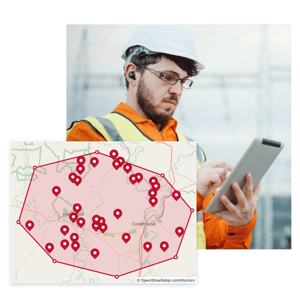
Map of interested and affected parties around Cookhouse in Tractivity

Influence, interest and segmentation

Influence and interest used honestly

Influence and interest scoring is the standard grid, and Tractivity carries it alongside sentiment tracking and segmentation. Score every stakeholder against attributes you define, compare up to three at a time, and watch the scores move across project phases.

It is useful for planning effort. It is not a reason to engage someone less than the statute requires. A grid that has quietly become a reason to under-notify a low-influence group is a grid that will be produced in a review. Use it to decide depth, not coverage: everyone Regulation 41 of the EIA Regulations requires you to notify gets notice, and the grid decides who gets a meeting on site and who gets a letter.
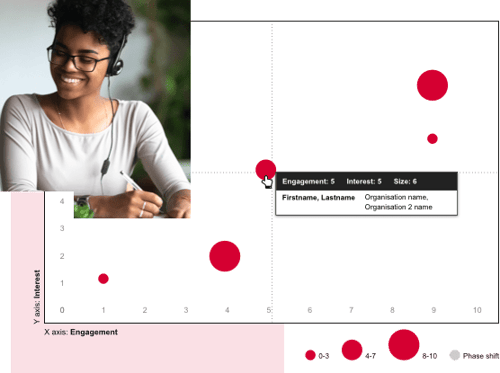
SHMapping-Tab2

Segmentation that survives a review

Segments are live queries over the register rather than static lists, so a segment built in March still contains the right people in November. Every send is recorded against the people it reached at that moment, so you can show exactly who received which notice, on which date, with proof of service. That record does not change when the segment does.

Engagement challenges in South Africa are often brought as reviews under the Promotion of Administrative Justice Act (PAJA), and section 6(2)(b) makes failure to comply with a mandatory and material procedure a ground of review. The defence is documentary.

Energy industry build a picture of stakeholders


Geography, wards and municipal boundaries

Addresses, wards and municipal boundaries come from the data you hold, and the register can be segmented by any of them.

Ward committees under the Municipal Structures Act, chaired by the ward councillor with up to ten other members, are a structure you can model as organisations with linked people rather than as a free-text note. That is what makes a ward-level report possible later.
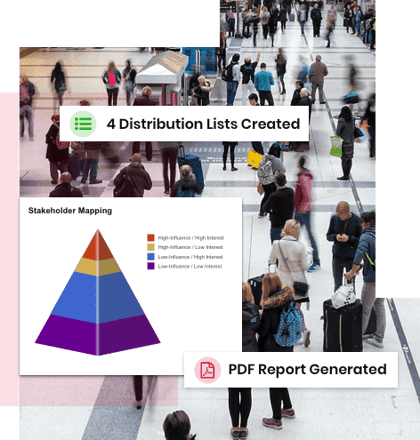
Platform overview improve


Traditional councils and informal rights

Traditional councils and the holders of informal land rights belong in the same register as everyone else, not in an annex. Model a council as an organisation with its members linked to it, record each rights holder individually, and keep consultation and consent as separate records against each person.

That separation matters. In Baleni v Minister of Mineral Resources (2018), the High Court held that the Interim Protection of Informal Land Rights Act requires a community's full and informed consent before a mining right is granted, and that consultation under the MPRDA was not enough. If you cannot show who holds the rights and who consented, the process is exposed. The mining and resources page sets out where that bites hardest.

Councils are organisations, and POPIA protects organisations as well as individuals, so their records need the same care. Our POPIA and stakeholder data page explains how.

tractivity platform overview


See Tractivity in action

What this does not do

Tractivity integrates with Mapolitical, a political contact database covering the United Kingdom. It does not cover South Africa, and there is no supplied list of South African ward councillors, MECs or parliamentary committee members inside the platform.

What that means in practice: identifying who the ward councillor is, and which organs of state have jurisdiction, is your work or your environmental assessment practitioner's.

What Tractivity does is hold that list once it exists, keep it current, and prove what was sent to it.

What the register gives you

Three things a mapping exercise has to produce when the list is statutory rather than discretionary.

Proof of coverage

Every category Regulation 41 and Regulation 3A name, held as a record type rather than a tag, so the report can show that each one received notice and on what date.

A basis for depth

Influence, interest and sentiment scores decide who gets a site meeting and who gets a letter. They never decide who gets notified, and the record shows the difference.

The document a review asks for

This list, on this date, received this notice, with proof of service, generated from the register rather than assembled from three inboxes eleven months later.

Learn more about stakeholder mapping

icon-stakeholder_mapping
 

The complete guide to stakeholder mapping 

 
How to identify, categorise, and prioritise your stakeholders.

Read the guide
icon-ai-detection2
 

Stakeholder analysis: a practical framework

 
Understanding needs, interests, and influence.

 
Read the guide
icon-dashboards
 

What is stakeholder management software?

 
How to choose the right platform for your organisation.
 
Read the guide
icon-oneplatform
 

What to look for in stakeholder mapping software

 
The features that separate a real system from a bolt-on grid.

 
Read the guide

Trusted by leading organisations

Tractivity is used by public bodies, utilities, transport operators and infrastructure programmes in the United Kingdom, including Severn Trent, UK Power Networks, SGN, the Department for Transport, SP Energy Networks, Electricity North West and NHS trusts in England.

Common questions about Tractivity's stakeholder mapping

Does Tractivity supply a list of South African stakeholders?

No. It holds and maintains the register you build. The Mapolitical integration that supplies political contacts covers the United Kingdom only.

Can we map by ward?

Yes, where you hold ward data on the record. Ward is an attribute you can segment and report on, and ward committees can be modelled as organisations with linked people.

Can organisations be mapped, not just people?

Yes, and in South Africa that is essential. POPIA treats juristic persons as data subjects, so a ratepayers' association or a community trust is a record with rights rather than a label on a contact.

How does mapping help in a PAJA review?

It is how you produce the list that received a notice, on the date it was sent. Section 6(2)(b) makes a missed mandatory procedure a ground of review, and the defence is documentary.

Can we score influence and interest?

Yes, along with sentiment. Use it to decide depth of engagement, never to justify notifying fewer people than Regulation 41 requires.

Can a map be exported for a report or an appendix?

Yes. Maps export as PDF or Excel, and the underlying segment can be reported on directly, which is what a comments and responses appendix usually needs.

Bring us your register

Bring the register you have, in whatever shape it is in: a spreadsheet of interested and affected parties, an attendance list from a public meeting, a set of organs of state you have to notify. We will show you what it looks like once it is categorised the way Regulation 41 and Regulation 3A name the categories, and what comes out of it when the competent authority asks.

Book a demonstration, or read how the register runs a whole participation process.