

Used in South Africa by Transnet, and across UK rail, metro and transport authorities


Three things that make transport engagement different
Transport engagement in South Africa has three features that break spreadsheets.
1. A corridor is a relationship, not a project
The first is that it’s geographic and it’s permanent. A rail reserve or a national road runs past thousands of properties and hundreds of communities, and the relationship doesn’t end when a project does. An encroachment matter opened in 2019 is still open, and the officer who opened it has moved on. The record has to belong to the parcel and the party, not to the person.
2. It’s politically exposed, and the record is the defence
The second is that it’s politically exposed. When engagement on a transport scheme is treated as communication rather than a real two-way process, the objections arrive later and louder. PRASA’s corridor recovery programmes run through communities that have lived alongside dormant infrastructure for years. In this sector engagement carries risk, and you need a record showing it was done.
3. No single party owns the corridor
The third is that no single party owns a corridor. Port expansion touches fishing, tourism and industry on the same stretch of coastline. An adjacent owner on one upgrade can just as easily be a business chamber member objecting to a different project further down the route. Hold each party against what they actually touch, and the record follows them across every matter instead of starting again each time.

What the law asks of a transport corridor
Every upgrade carries the standard obligations: environmental impact assessment (EIA) public participation, notice to every adjacent owner and occupier and every organ of state under Regulation 41 of the EIA Regulations, and procedural fairness under the Promotion of Administrative Justice Act (PAJA) whenever a decision affects somebody’s rights.
Third-party access is a new consultation cycle, running annually
The Economic Regulation of Transport Act 6 of 2024 created a single Transport Economic Regulator and opened the rail network to third-party operators. Transnet published its final Network Statement on 20 December 2024.
Access tariffs need public and industry consultation and regulator approval. Capacity has to be allocated fairly and transparently through annual applications, and minimum eligibility requirements include taking part in community development initiatives. That’s a new consultation cycle, with a new set of counterparties, every year.
Built for corridors and for the long relationship
Tractivity holds the parties, the parcels, the notices, the matters and the consultation cycles in one place, so the record survives the project team, the officer and the annual round.
Stakeholders mapped to land
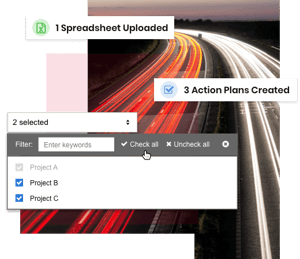
Google Maps stakeholder mapping with a Land Parcels module, so adjacent owners, occupiers, encroachers and communities sit on the map along the route. Filter by corridor section, ward, municipality or party type. See which stretch of the line generates the grievances.
One party, every project they touch
An adjacent owner on a siding upgrade can also be a business chamber member objecting to a terminal expansion and a claimant in a servitude matter. Hold them once, link them to each matter, and their history follows them.
Notices served and proven
Notices sent from the platform and saved against every recipient’s record, with proof of service per party rather than in aggregate. Site notices, adverts and Gazette notices logged with the dated photograph or tear-sheet attached.
Encroachments, servitudes and long-running matters
Log the matter against the parcel and the party, record every engagement and every commitment, and track it to resolution however long it takes. Handover between officers becomes a read of the record rather than a conversation.
Traditional councils and communal land
Where a corridor crosses communal land, the traditional council is a standing counterparty with its own membership and its own meeting cycle, not a contact on a project list. Hold it as an organisation, with the engagement history attached to the institution rather than to whoever attended last time.
Access and tariff consultation
Run the third-party access and tariff consultation cycles as projects in their own right: the notice, the comment window, the submissions received, the responses given and the report to the regulator. Annual cycles become a reporting template rather than a fresh start each year.
Grievances and enquiries
Complaints, grievances, requests for information and project feedback are logged in the Enquiries module. Each one is date-stamped and categorised by project phase, issue, source, sentiment and handler, with templated responses for recurring enquiries. A shared project or corridor mailbox can be connected, so inbound correspondence lands in the same place.
Reporting
More than 150 pre-built reports and configurable dashboards, exportable to Word, Excel and PDF, with a full date-stamped audit trail. Power BI supported today through scheduled exports.
What this looks like in UK transport

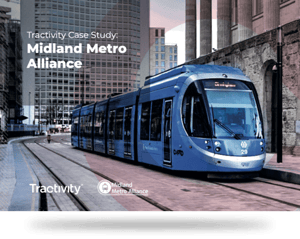
Midland Metro Alliance
The Alliance has used Tractivity across its metro extension programme since 2016, logging more than 300 queries in the first months alone and over 2,500 stakeholder engagements to date. The programme has won Partnership Initiative of the Year at the British Construction Industry Awards 2018, the Integration and Collaborative Working Award at the Construction Excellence Awards 2019 and Team of the Year at the Global Light Rail Awards 2017.

Transport for the South East
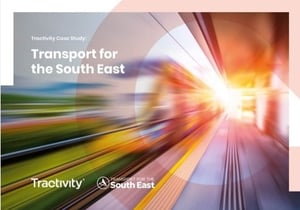
The team manages around 3,000 contacts across 16 local transport authorities, 46 district and borough councils, more than 1,000 town and parish councils and 71 MPs, five times the stakeholder volume it had when it started using Tractivity. Time spent on stakeholder and contact management has dropped to less than a quarter of what it took with spreadsheets and Outlook.

Procurement, compliance and go-live in South Africa
Already working with Transnet
Transnet uses Tractivity. The corridor, encroachment and access-consultation problems on this page are ones we’re already working on with a South African client, not a UK approach applied from a distance.
Ready for SOE procurement questions
ISO 27001:2022 and Cyber Essentials Plus certified, and an approved G-Cloud supplier to the UK government since 2019. Hosted on Microsoft Azure with encryption at rest and in transit. Penetration tested every year by an independent CREST-approved organisation, with a 99.95% uptime guarantee and 24/7/365 monitoring. Role-based permissions are set at project, module and record level, and there’s no local software to install. Full details, including POPIA, are on the security and compliance page.
Implementation in four to six weeks
Four to six weeks on average from contract signing to launch. That covers planning calls, system set-up, configuration, data import and checks, and end-user training, with a minimum of 20 hours of onboarding and two 1.5-hour training sessions with a dedicated UK-based Client Success Manager. How long it takes depends as much on how quickly your data is supplied as on us.
Corridor and access engagement, answered
The Economic Regulation of Transport Act 6 of 2024 opened the rail network to third-party operators and created a single Transport Economic Regulator. Access tariffs need public and industry consultation and the regulator's approval. Capacity is allocated through annual applications, and minimum eligibility requirements include taking part in community development initiatives. In practice, that's a new consultation cycle every year, with a new set of counterparties.
Adjacent owners and occupiers, encroachers, the communities along the route, municipalities and ward councillors, and every organ of state with an interest. Where a corridor crosses communal land, the traditional council is a standing counterparty. Around ports, the list includes fishing, tourism and industry groups on the same stretch of coastline. Under the access regime, it now also includes the third-party operators applying for capacity.
It keeps the matter attached to the parcel and the party, not to the officer who opened it. In Tractivity, each servitude or encroachment matter is logged against the land parcel and the parties involved, and every engagement and commitment is recorded until it's resolved, however long that takes. When an officer moves on, their replacement reads the record instead of starting from scratch.
Yes. Transnet uses Tractivity in South Africa. In the UK, it's used by rail, metro and transport organisations including GWR, Midland Metro Alliance and Transport for the South East.
Each notice is sent from the platform and saved against the recipient's record, so there's proof of service for each party, not just a total. Site notices, newspaper adverts and Gazette notices are logged with the dated photograph or tear-sheet attached. That gives you the evidence Regulation 41 of the EIA Regulations expects, ready to put in front of the competent authority.
Yes. The EIA public participation process runs as a project in Tractivity, with its notices, comment period, submissions and responses. When the project closes, the parties stay on the record, along with every commitment made to them. The next upgrade or access round starts from that history, not a new spreadsheet.
Start with one corridor or one consultation round
Bring us one stretch of line, one port precinct or one access consultation round, and we’ll show you what the record looks like when the system holds it, including the reports you’d give a regulator.
Worth reading next: public participation software for South Africa, stakeholder engagement for energy and transmission, and POPIA and your stakeholder database.