


Public participation software for municipalities and metros
Chapter 4 of the Municipal Systems Act does not ask you to communicate. It asks you to receive, process and consider petitions and complaints, and to report back.
One system for the IDP round, the budget round, the ward committees and everything the community sends you in between.

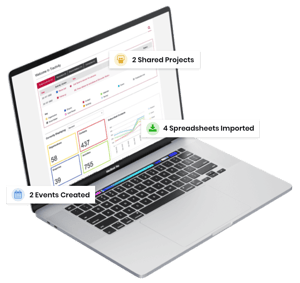
Trusted by public bodies, utilities and infrastructure programmes in the UK


Municipal Systems Act public participation requirements
Section 16 of the Municipal Systems Act requires a municipality to develop a culture of participatory governance and to create the conditions for the community to participate in the IDP, the performance management system, the monitoring of performance, the budget and strategic decisions on service provision. Section 17 requires actual mechanisms for this participation:
- Receiving, processing and considering petitions and complaints
- Notification and public comment procedures
- Public meetings and hearings
- Consultative sessions with locally recognised community organisations and, where appropriate, traditional authorities
- Report-back to the community
These mechanisms must also make provision for people who cannot read or write, people with disabilities, women and other disadvantaged groups. Section 18 requires the community to be told how it can take part, taking account of language preferences and the needs of people who cannot read or write. Section 21 requires notices in the official languages the council determines, and section 42 requires community involvement in setting performance indicators and targets. Separately, section 19 of the Municipal Structures Act requires the council to review its processes for involving the community every year.
The budget cycle adds dates, and the audit adds consequences
A time schedule is tabled at least 10 months before the budget year. The budget itself follows at least 90 days before it, published immediately with an invitation for representations, every comment considered before approval. An annual report is due within seven months of year-end, then an invitation to comment and an oversight report within two months, all at meetings open to the public.
The Auditor-General tabled the 2024-25 consolidated local government audit outcomes on 24 June 2026: 39 municipalities, 15 per cent, achieved clean audits. The Auditor-General called on civil society, business and citizens to keep playing their part in the accountability ecosystem. Participation isn’t a soft function in that environment. It’s the evidence that the ecosystem is working.
Most of that evidence currently exists as attendance registers in a filing cabinet, comment forms in a box, and an inbox nobody has time to read.
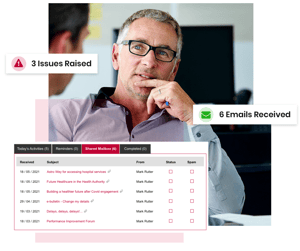
Public participation duties discharged as a process rather than an event
Tractivity holds the community register, the consultation programme, the correspondence, the petitions and complaints, and the reporting in one place, so the record exists as the work happens rather than being assembled after the fact.
- 257 municipalities, 8 metros, 44 districts and 205 local, per COGTA
- 5 participation mechanisms every municipality must have, under section 17(2) of the Municipal Systems Act
- Up to 10 members plus the ward councillor on every ward committee, under the Municipal Structures Act
- 15% of municipalities achieved clean audits in 2024-25, per the Auditor-General
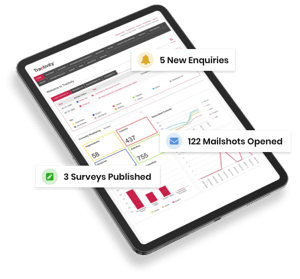

Every duty, run as one process
Each of the eight areas below maps to a statutory duty under the Municipal Systems Act, the Municipal Structures Act or the MFMA, and shows how it plays out inside the platform rather than in a separate spreadsheet or inbox.
Every petition, complaint and enquiry, processed
Section 17(1)(a) asks for a mechanism to receive, process and consider petitions and complaints. That is the Enquiries module: every submission logged, date-stamped and categorised by ward, issue, source, sentiment and the official handling it, with templated responses for the recurring ones, an assigned owner, a due date and a closure record. A shared mailbox can be connected so what arrives by email lands in the same place as what arrives at the counter.
One community register across every process
Residents, ratepayers’ associations, community organisations, community policing forums, business chambers, traditional councils, faith groups, schools, ward committees and ward councillors, held once and related to every consultation they take part in. The IDP round, the budget round, a SPLUMA application, an atmospheric emission licence and a service delivery consultation all draw on the same register instead of five separate lists.
The IDP round, planned against the statutory dates
Set the consultation programme against the dates in the tabled time schedule, then log every imbizo, ward meeting and public hearing with its invitation, attendance register and minutes. The programme is visible before the round starts, not reconstructed after it.
The budget round, with every representation recorded
Capture every representation received on the tabled budget, the annual report and the oversight process, with the response and the official who gave it, and record what the council considered and decided. Then run the report that shows it.
Ward committees, run from one record
Ward committee membership, meeting schedules, attendance and recommendations held against the ward and the committee, with the ward councillor as chair. When a recommendation goes to the council, the trail from ward meeting to council decision exists.
Report-back, which is the duty everybody forgets
Section 17(1)(e) requires report-back to the community. Build a distribution list from the register by ward, language preference or interest, send from the platform, and the correspondence is saved against every recipient. Address validation and opt-in checking run before a mailshot goes out.
Notices in the council’s official languages
Hold the notice, the summary and the comment form in as many official languages as the council’s language determination requires, and track which version each resident received. Under section 21 of the Municipal Systems Act, that’s a duty, not an aspiration.
Performance and the annual review
Section 19 of the Municipal Structures Act requires the council to review its processes for involving the community every year. More than 150 pre-built reports plus configurable dashboards give you participation volumes by ward, response times on petitions and complaints, issues by sentiment and the gaps in coverage. Exportable for the oversight report, the annual report and the audit file.
Land development and licensing sit in the same register
SPLUMA requires public participation on the Spatial Development Framework, on the land use scheme and on land development applications: notice to affected and adjacent owners, a period for objections and representations, the applicant’s right of reply, and a Municipal Planning Tribunal that may hold a public hearing. The operative notice periods usually sit in the municipality’s own by-law, so the system holds the period as a project setting.
Under the Air Quality Act, metropolitan and district municipalities are the licensing authorities for atmospheric emission licences, and applicants must publish notice in at least two newspapers circulating in the area inviting public comment. Those objectors are already in your register.
And whichever process is challenged, it is challenged under PAJA. Section 3 requires adequate notice, a reasonable opportunity to make representations, notice of any appeal right and notice of the right to request reasons. Section 6(2)(b) makes non-compliance with a mandatory and material procedure a ground of review. With Tractivity, the notices, the representations and the responses are already in the record, dated and linked to the people they went to.
Ready for municipal procurement questions
Procurement will ask about certification, hosting, access control, data and how long implementation takes. There is no local software to install: Tractivity is browser-based for administrators and for the public, and role-based permissions operate at project, module and record level.
POPIA: a public law duty, not consent
Section 11(1)(e) of POPIA permits processing necessary for the proper performance of a public law duty, and Chapter 4 of the Municipal Systems Act imposes that duty, so consent is the wrong lawful basis for a statutory participation record. What you will be asked about is the section 18 collection notice, control over special personal information, and the separation of statutory notices from direct marketing under section 69. All of that is covered on our POPIA page.

Implementation in four to six weeks
Four to six weeks on average from contract signed to launch, covering planning calls, system set-up, configuration, data import, checks and end-user training, with a minimum of 20 hours of onboarding and two 1.5-hour training sessions with a dedicated Client Success Manager. How long it actually takes depends as much on how quickly your data is supplied as on us.

Accreditations and independent testing
ISO 27001:2022 and Cyber Essentials Plus certified, and an approved supplier on the UK government’s G-Cloud framework since 2019. Hosted on Microsoft Azure in UK data centres by default, with alternative hosting regions available on request. Encryption at rest and in transit, independent penetration testing every year by a CREST-approved organisation, and a 99.95 per cent uptime guarantee with 24/7/365 monitoring.

Role-based permissions at project, module and record level
Permissions aren't all-or-nothing. A ward committee member sees only their ward, an official sees only the modules their role covers, and the municipal manager or the Speaker’s office gets the rolled-up view without touching individual entries. Multiple departments, ward committees or partner municipalities can work inside one system with clean separation by structure, so access control is built into the platform rather than bought as an add-on.
Public participation software for municipalities: common questions
Section 16 requires a municipality to build a culture of community participation in the IDP, performance management, the budget and strategic decisions on services. Section 17 requires the mechanisms to make that happen: receiving and processing petitions and complaints, notice and public comment procedures, public meetings and hearings, consultative sessions with community organisations and, where appropriate, traditional authorities, and report-back to the community.
Yes. Tractivity holds one community register that every process draws on, so the IDP round, the budget round, ward committee meetings and SPLUMA or licensing matters all record against the same people and organisations. Each representation is logged with the response and the official who gave it.
Section 11(1)(e) of POPIA permits processing that’s necessary for a public body to perform a public law duty, and Chapter 4 of the Municipal Systems Act imposes that duty. So consent is the wrong lawful basis for a statutory participation record. You’ll still need a section 18 collection notice, and statutory notices have to be kept separate from direct marketing.
Yes. The platform interface is in English. Notices, summaries and comment forms can be held in as many official languages as the council has determined, with a record of which version each resident received.
Four to six weeks on average from contract signed to launch, covering set-up, configuration, data import and training. How long it actually takes depends as much on how quickly your data is supplied as on us.
Start with the next IDP round
Bring us your consultation programme for the coming cycle and we will show you what the record looks like when the system holds it, including the reports for your oversight file.
Worth reading next: POPIA and your stakeholder database, public participation software for South Africa, and stakeholder engagement for water.