

Stakeholder engagement software for energy, transmission and renewables
More than 14,000 km of new transmission lines within the decade, and every kilometre crosses somebody’s land. One system for the landowners, the communities, the community trusts and the commitments that outlast the project team.

Used in South Africa by Lesedi Nuclear Services, and across the UK energy sector by National Grid, SSEN, EDF and others









Consenting is now the constraint, not generation
South Africa’s energy build has moved from a generation problem to a delivery problem, and delivery runs through land and communities.
Phase 1 of the Independent Transmission Programme (ITP) covers 1,164 km of 400 kV lines across the Northern Cape, North West and Gauteng. The Transmission Development Plan estimates more than 14,000 km of new line is needed within the decade. National Treasury's own market sounding recorded permitting, right of way and supply chain constraints as the risks bidders wanted mitigated.
In practice, every route needs:
- servitude negotiation with hundreds of landowners
- public participation under Regulations 39 to 44 of the 2014 EIA Regulations
- notice to every adjacent owner, occupier and organ of state with jurisdiction
- a comments and responses report at the end of each round
At the same time every project in the Renewable Energy Independent Power Producer Procurement Programme (REIPPPP) carries a scored Economic Development package: a Local Community Trust holding a minimum shareholding for communities within a defined radius, and Socio-Economic Development and Enterprise Development contributions expressed as a percentage of revenue. Those obligations require beneficiary identification, community consultation, trustee appointment and annual reporting to the IPP Office, and they run for the life of the power purchase agreement, roughly 20 years. The team that made the commitments at bid stage will not be the team reporting on them in year 15.
Three regulators, three evidence requirements, one set of communities
On the licensing side, National Energy Regulator of South Africa (NERSA) licence applications and rule-making both run on published notices, comment windows and public hearings. Where a nuclear installation has an emergency plan, the licence holder must establish a Public Safety Information Forum, chaired by a local resident appointed by the National Nuclear Regulator Board, which meets in public every quarter. The Board can also arrange public hearings on health, safety and environmental representations under section 21 of the National Nuclear Regulator Act. And the public participation process for an environmental authorisation must include consultation with the competent authority itself, with at least 30 days for comment on every basic assessment, scoping and EIA report under Regulation 40 of the 2014 EIA Regulations.
Each of those bodies wants different evidence from the same engagement. The record has to serve all three without being assembled three times.

Built for corridors, communities and 20-year commitments
Six things a land, consents or community relations team needs on every corridor and every site, and the reason each one exists.
Landowner and servitude engagement at corridor scale
Every landowner, lawful occupier, adjacent owner, traditional council and organ of state along the route is held once and related to every project that touches them. Notices served from the platform and saved against each recipient, so proof of service exists per party rather than in aggregate. Google Maps stakeholder mapping shows who sits where along the corridor, with land parcels attached.
Public participation run properly
The register of interested and affected parties, the 30-day comment periods, the site notices with dated photographs attached, the newspaper tear-sheets, the attendance registers and minutes, and the comments and responses report as an export rather than a fortnight of collating. Full detail on our public participation software page.
Community trusts and economic development commitments
Log every Economic Development obligation as a commitment with an owner, a value, a due date and a reporting cycle. Track beneficiary identification, trustee appointments, needs assessments and community committee meetings against the trust as a stakeholder in its own right. When the IPP Office asks for the annual report in year 15, the record is there.
Wind, solar and storage sites
Renewable projects bid into REIPPPP carry their community commitments from bid stage into operation. Hold the site's landowners, neighbouring communities, municipalities and traditional authorities in one register, record every engagement from pre-bid consultation onwards, and hand the full history to the operations team at financial close.
Issues, sentiment and escalation
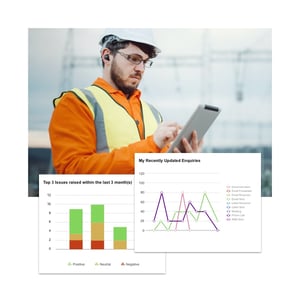
Group comments and grievances into issues, track each with positive, negative or neutral sentiment and a traffic-light status, and run impact analysis across the corridor or the portfolio. Objections cluster geographically. Tractivity shows you that before the appeal does.
Grievances and reporting
Complaints, grievances and requests for information are logged, categorised and tracked to resolution, with templated responses for recurring issues. This is what lenders under the Equator Principles expect to see operating. More than 150 pre-built reports and configurable dashboards export to Word, Excel and PDF, with a full date-stamped audit trail.
For nuclear and high-consequence engagement
Nuclear engagement in South Africa is a standing obligation rather than a project phase. Affected persons can make representations to the National Nuclear Regulator (NNR) Board on health, safety and environmental issues, and the Board can arrange public hearings. Licence holders with an emergency plan must also run a quarterly Public Safety Information Forum, chaired by a local resident appointed by the NNR Board. Site licence applications trigger public hearings of their own.
That is a relationship measured in decades, with the same communities, forums and questions returning. Lesedi Nuclear Services already uses Tractivity in South Africa.

What this looks like at scale in UK energy


Tractivity has improved the way we engage with stakeholders and manage interactions. The system gives us access to a range of tools and reports, which means it delivers the results we look for in one system.
SSEN
Tractivity has helped us to record data in an accessible way for a large number of stakeholders.
ScottishPower
Frequently asked questions
Every bid into the Renewable Energy Independent Power Producer Procurement Programme (REIPPPP) carries a scored Economic Development package alongside price. The engagement-generating obligations are local community ownership through a Local Community Trust holding a minimum shareholding for communities within a defined radius, which requires beneficiary identification, community consultation, trustee appointment and annual reporting; and Socio-Economic Development and Enterprise Development contributions expressed as a percentage of revenue and spent in the local community, which require needs assessments, community committees and impact reporting to the IPP Office. These obligations run for the life of the power purchase agreement, around 20 years.
National Treasury records that market participants flagged permitting, right of way and supply chain constraints as the risks to be mitigated in the Independent Transmission Programme. Phase 1 covers 1,164 km of 400 kV transmission lines across the Northern Cape, North West and Gauteng, and the Transmission Development Plan estimates that more than 14,000 km will be needed within the decade. Every kilometre requires servitude agreement with the landowners it crosses, and every route requires public participation under the 2014 EIA Regulations, with notice to adjacent owners and occupiers and to every organ of state with jurisdiction. Consents, not construction, are the critical path.
Section 21 of the National Nuclear Regulator Act 47 of 1999 allows any person whose health, safety or environmental interests may be affected to make representations to the National Nuclear Regulator (NNR) Board, and allows the Board to arrange public hearings on those representations. Where a nuclear installation has an emergency plan, the licence holder must also establish a Public Safety Information Forum, chaired by a local resident appointed by the NNR Board, which meets in public every quarter. Site licence applications trigger public hearings of their own. Nuclear engagement is therefore continuous rather than tied to a project phase.
Yes. Licensing and rule-making by the National Energy Regulator of South Africa (NERSA) under the Electricity Regulation Act 4 of 2006 both run on published notices, written comment windows and public hearings. In practice that means a comment period the applicant has to track, submissions the applicant has to respond to, and a hearing record, all of which sit alongside the EIA public participation record for the same project and the same communities.
Tractivity is hosted in UK data centres by default, with alternative hosting regions available on request. The platform runs on Microsoft Azure and is certified to ISO 27001:2022 and Cyber Essentials Plus. Data is backed up daily, encrypted and held in a separate secure location for 30 days, and the hosting environment is monitored around the clock by a security operations centre. Tractivity's AI features run in Microsoft Azure's UK region, and customer data is never used to train AI models.
Start with one corridor
Bring us a route, a bid window obligation or a licence application and we will show you how the record holds together.
Ready to evidence your engagement?
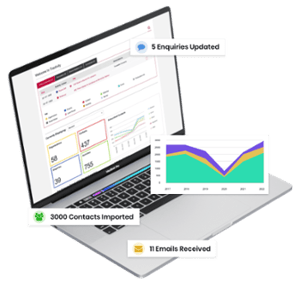
Organisations in South Africa, the UK and Europe use Tractivity to hold the register, record every engagement against the party it relates to, and produce the reporting a regulator asks for.
Book a personalised demonstration, or start with the compliance question and read POPIA and your stakeholder database.