


The stakeholder management system built for effective engagement
One record for every interested and affected party, every engagement, every issue, every commitment and every grievance. Built for stakeholder relationship management, not adapted from a sales tool.

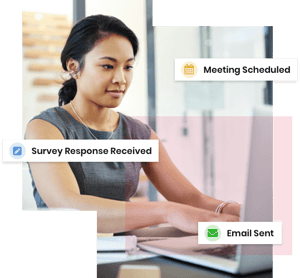

The data model is different
An SRM tracks relationships, influence, sentiment, consultation and the auditable evidence that engagement took place. A CRM tracks revenue, pipeline and sales activity. They are not the same shape, and forcing one into the other is where the record starts to fail.
Fields a CRM has no place for
How a party registered on a statutory register, which notice version they received, which language they asked for, whether they are an organ of state, the issue their comment belongs to, the sentiment of that issue over time, the commitment made in response and whether it closed. And an audit trail designed for regulatory scrutiny rather than commercial reporting.
The register survives the project
A project team disbands. The obligation, and the community, do not. The next application in the same area starts from a real register rather than from a blank sheet and somebody’s memory.
 Stakeholders and organisationsThe register. Individuals and organisations with contact details, roles, interests, influence, sentiment and relationship history. Hierarchies and group structures for complex party landscapes, from a traditional council with a ward committee alongside it to a community trust with named trustees and beneficiaries. Party type, language preference, how they registered and whether they are an organ of state all held as fields. No caps on records.
 EnquiriesComplaints, grievances, project feedback and access-to-information requests, date-stamped and categorised by project phase, issue, source, sentiment and account handler, with templated responses. This is the grievance mechanism IFC Performance Standard 1, Equator Principle 6 and the UN Guiding Principles ask for, and the workflow that answers a PAIA request.
 Mail synchronisation and communicationsEvery email sent through the platform is saved automatically against the stakeholder’s record, and the whole team can see the trail. Sender addresses are configurable to an individual, a group or a project address. Emails can be created in Tractivity and transferred into Outlook with the correspondence still logged. An existing generic mailbox can be connected so inbound and outbound mail is administered inside Tractivity and linked to the relevant party, organisation or enquiry, with templated responses for recurring matters. Deliverability comes from SPF records and DKIM authentication.
 Issues and commitments
Group comments and grievances into issues, track each with positive, negative or neutral sentiment and a traffic-light status, and run impact analysis. Log commitments with an owner, a value, a due date and a reporting cycle, and track them to closure. This is what an SLP round, a REIPPPP economic development obligation and a licence condition all need.
 Engage-360 public portalA branded public engagement portal where community members self-register, respond to surveys and take part in consultations, feeding directly into the register. Under EIA Regulation 42 a party who requests in writing to be added must be registered, and a portal is the cleanest way to run that at scale. Engage-360 is a separately-priced module, configured to your audience scale, customisation and integration scope.
 Reporting and dashboardsMore than 150 pre-built reports plus configurable dashboards, in tabular, matrix, graph, demographic, mapping and dashboard views, exportable to Word, Excel and PDF. Full date-stamped audit trail, filterable by activity or interaction type. Power BI is supported through scheduled exports to a designated location.
 MailshotsBulk communications built from the register. Every address is automatically validated before use and opt-in is checked, which matters both operationally and under POPIA section 69. Distribution lists by project, ward, interest, party type or language preference.
 Stakeholder mappingInfluence and interest mapping, segmentation, and mapping by location using Google Maps with a Land Parcels module, so a corridor, a mining right area or a ward can be read geographically. Prioritise engagement where it matters and show the reasoning.
 Events and meetingsInvitations, registrations, attendance and minutes, with Microsoft Teams meeting creation and management from inside the platform.
 Surveys and online consultationsStructured feedback gathering, with responses attached to the party who submitted them.
Book a demonstration with the team
See exactly how Tractivity would work for your team, using one of your own projects and your own stakeholder register.