


<img src="https://secure.leadforensics.com/85165.png" alt="" style="display:none;">
Skip to content
The single source of truth for all stakeholder management & engagement.
The complete set of features for effective stakeholder management.
Capture feedback, track issues and commitments and analyse sentiment to improve planning and outcomes.
Your stakeholder data protected by ISO 27001, Cyber Essentials Plus and full GDPR compliance.
Design surveys and custom forms to capture stakeholder feedback.
AI-powered dashboards and 150+ pre-built reports to unlock actionable stakeholder insights.
Our onboarding process and dedicated ongoing customer support to help you deliver impact.
Track, understand and take action on your stakeholder relationships.
Deliver a 360° engagement process with our Engagement Portal.
You’re the expert. We’re the software, and the home of stakeholder engagement.

dropdown-demo-2

Learn why leading organisations trust Tractivity.
Support patient involvement and work effectively with a wide-ranging number of stakeholders.
Build community trust and support positive outcomes across projects.

Compare your options 

Effectively manage and listen to your stakeholders and show them they are being heard.
Engage with stakeholders across projects and public consultation.

Compare your options 

Manage and build relationships with stakeholders and communities.

Compare your options 

Manage multiple clients and their projects in one centralised system with a full engagement audit trail.
Manage stakeholder engagement across regulated services, programmes and day-to-day operations.
Understand what makes your institution unique and support its growth.
You’re the expert. We’re the software, and the home of stakeholder engagement.

dropdown-demo-2

Learn why leading organisations trust Tractivity.
Read our customer success stories and discover how our clients are delivering impact with Tractivity.
The step-by-step guide to building an effective stakeholder engagement plan, with template.
Thought-provoking views and helpful insights from engagement experts on stakeholder engagement.
Helpful tips, guides and articles about stakeholder engagement, project management and more.
Learn how to identify, categorise and prioritise your stakeholders with our complete guide.
Empower sustainable engagement with AccountAbility's framework and Tractivity's system.
Understand your stakeholders' needs, interests and influence with our practical framework.
Free guides, whitepapers, templates and more to help you deliver sustainable outcomes.
Reach the people that matter to you with Mapolitical and Tractivity.
You’re the expert. We’re the software, and the home of stakeholder engagement.

dropdown-demo-2

Learn why leading organisations trust Tractivity.
Rate your organisation across five categories in minutes and get an instant score with tailored recommendations.
Everything you need to meet Ofwat's expectations and show how customer insight shapes your delivery.
Calculate the time your team loses to manual admin into a defensible number for the board.
Your complete six-part toolkit for planning, running, and documenting your stakeholder engagement.
Understand the legal test for a fair consultation, and self-audit your consultation to see where it's vulnerable.
Explore free, practical resources for managing stakeholder engagement and delivering effective consultation.
You’re the expert. We’re the software, and the home of stakeholder engagement.
dropdown-demo-2
Learn why leading organisations trust Tractivity.
All of Tractivity's Stakeholder Engagement Events.
The 2026 Event is coming soon! Sign up now to save your spot.
Explore talks and presentations from last year's event.
View keynotes and real-world case studies from the summit.
Watch the sessions and insights from our live event.
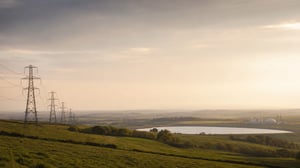
UK electricity pylons, a reservoir and gas infrastructure
Emily Pritchard 14 July 2026 (Updated 14 July 2026) 6 min read

What is utility stakeholder relationship management?

What Is Utility Stakeholder Relationship Management? | Tractivity
6:19

Utility stakeholder relationship management (SRM) is the practice of recording and coordinating every interaction a water, gas or electricity company has with the people and organisations affected by its work, in one shared system. It brings customers, communities, regulators, landowners and politicians into a single record, so a utility can show who it engaged, when, how and with what outcome.

A utility doesn’t engage stakeholders to close a sale. It engages them because a regulator, a planning inspector or a community expects to see a defensible account of the conversation. SRM is the discipline and the software that produces that account.


What counts as a stakeholder for a utility?

For a water, gas or electricity company, a stakeholder is anyone with an interest in, or affected by, how the network is run and built. That’s a far wider group than a customer list. It spans domestic and business customers, parish and community groups, landowners, environmental bodies, emergency responders, MPs and councillors, and the sector regulator.

SSEN puts the scale plainly: its two licensed network areas carry electricity to over 3.7 million homes and businesses, and the list of interested parties runs from trade bodies and environmental groups to regulators and government. National Grid, running electricity and gas networks on both sides of the Atlantic, engages customers, regulators, communities and government across the whole footprint. The same person often appears in several of those groups at once, which is exactly why a shared record matters.


How is SRM different from a CRM?

A customer relationship management (CRM) system tracks revenue, pipeline and sales conversations. Stakeholder relationship management tracks relationships, sentiment, issues and engagement activities. The jobs are different, so the data models are different.

A utility’s stakeholder isn’t a lead to be converted. They’re a landowner whose field sits on a cable route, a councillor briefing residents on a reservoir, or a regulator reviewing a price submission. A CRM models a linear funnel from lead to customer. Stakeholder work is many-to-many: one community group touches five projects, three teams engage one MP. Tractivity, the UK SRM platform, is built around that shape, capturing who matters, what they think, and how their position is moving, rather than whether they’ll buy.

This is why utilities that try to repurpose a sales CRM or a spreadsheet tend to hit a wall.


What does utility stakeholder relationship management involve?

Good utility SRM brings four things into one place.

  • A single stakeholder record - every email, meeting, call, survey response, event and comment is logged against the stakeholder it relates to, across every programme

  • A shared view - project teams see the same stakeholder and coordinate rather than sending four uncoordinated approaches from one company

  • A communications suite - mailshots, surveys, consultations, and events sit within the same system that holds the record, with opt-ins and unsubscribes tracked for UK GDPR compliance

  • Regulator-ready reporting - the evidence of who was engaged, when and how, can be produced on demand

Held together, they turn scattered activity into an auditable programme. The record survives staff turnover too, which matters when a reservoir or a transmission project runs for a decade, and the original team has long since moved on.


Why does the ‘relationship’ part matter for utilities?

Because utilities are judged on the relationship, not the transaction. Ofwat’s price reviews expect water companies to show how customer and stakeholder views shaped their plans. Ofgem’s RIIO framework sets the same expectation for energy networks. For major schemes classed as Nationally Significant Infrastructure Projects, the Planning Inspectorate examines the consultation record itself, and the Gunning Principles remain the legal test: consult when views can still influence the outcome, give people enough to respond, consider what they say, and keep it in mind when deciding.

None of that can be evidenced from memory. It needs a dated, searchable record of the relationship over time. EDF Energy’s Hinkley Point C and Sizewell C programmes show what that looks like at scale: around 30,000 issues logged and tagged, 130,000+ engagements, and a 100% response rate on stakeholder issues, all exportable when an examination phase closes.


What does good utility SRM look like in practice?

It looks like one system is carrying both the daily work and the major projects. Anglian Water manages more than 13,000 stakeholders in Tractivity across a roughly £10 billion investment programme, keeping political data current through a Mapolitical integration and handing evidence to the regulator during both routine briefings and live incidents.

Tractivity runs our live interactive, day-to-day stakeholder programme, which is invaluable to us. It saves time and provides fantastic insight and reporting outputs that we can present to our Executive Committee on performance and engagement. - Grant Tuffs, Regional Engagement Manager, Anglian Water

It also looks like adoption that sticks. National Grid runs 430+ users across the UK and US east coast; SSEN grew from 15 users in 2018 to over 200 today. On average, teams using the platform report a 20% efficiency gain per engagement professional, worth £5,000 to £8,200 a year, most of it recovered from reporting and record-keeping admin.


See Tractivity in action

If you’re managing stakeholder engagement across a utility network and want to see how a purpose-built SRM platform holds the record together, our team would be glad to show you. Whether it’s a single reservoir consultation or a decade-long transmission programme, the sooner every interaction sits in one place, the easier the evidence is to produce.

Book a demo to see it with your own programmes in view, or get in touch if you’d like to talk your setup through first.

Frequently asked questions

What is utility stakeholder relationship management? It’s the practice, and the software, of recording and coordinating every interaction a water, gas or electricity company has with affected people and organisations in one shared system, so the company can evidence who it engaged, when, how and with what outcome. It covers customers, communities, regulators, landowners and politicians.
Is stakeholder relationship management the same as a CRM? No. A CRM tracks revenue, pipeline and sales conversations. SRM tracks relationships, sentiment, issues and engagement activities across many-to-many connections. A utility’s stakeholder is a community member, regulator or landowner, not a sales lead, so the data model, reporting and communication tools are built for a different job.
Which regulations shape stakeholder engagement for UK utilities? Water companies work to Ofwat’s price review expectations, energy networks to Ofgem’s RIIO framework, and NSIP schemes to the Planning Act 2008 and Development Consent Order process. The Gunning Principles set the common-law standard for consultation across all of them, and UK GDPR governs how contact data is held.
Why can’t a spreadsheet do the job? Spreadsheets don’t scale to thousands of stakeholders across parallel programmes, and they’re uncontrolled by default, so records can be altered or deleted without trace. University of Hawaii research found 94% of spreadsheets contain errors. For a regulated consultation, that reliability gap becomes a compliance risk.
Who uses utility stakeholder relationship management software? Stakeholder engagement managers, communications and external affairs teams, and programme leads at water companies, gas networks, DNOs and transmission operators. Tractivity is used across the sector, including by Anglian Water, EDF Energy, National Grid, SSEN, Severn Trent, Northern Gas Networks and SGN.
avatar
Emily Pritchard
Emily is Digital Marketing Executive at Tractivity with over 6 years’ experience delivering campaigns for a range of B2B sectors. She’s motivated by crafting impactful marketing and delivering value through engaging content.
Comments

Related Articles