


Stakeholder management is everyone's job
The first session of The Stakeholder Engagement Room: Live, with Rhion Jones, the Consultation Guru, chaired by Vicky Adamson. Recorded on Monday 5 October 2026.
Free to watch • No registration needed
Watch the webinar:
the subject for today, is really a variation of a theme that we pursued at the Tractivity stakeholder engagement day in September. We've tweaked it a little bit because we could also have reworded it and said, is stakeholder management everyone's job? And that's slightly different. And I'd like you to regard the topic as really being in effect, and I'm gonna try and move a slide here to see if I can. And that that hasn't worked. So I need to... Right. I'd like to regard the topic really as being, is it really a specialist function? Those of us who are interested in stakeholder management, or is it really something of a general management capability? I'm old enough to remember the time where back in the nineteen eighties, I think it was in nineteen nineties, and I was working in the IT industry. And the vogue was to have quality management. There's something called TQM. Nobody remembers it. Total quality management. And everybody went bonkers over this for a while until suddenly it became passe, and managers started saying to us, you're all quality managers. Such specialists, you're all. And you kinda wonder, is this gonna happen in a similar way to stakeholder management? Now many of you, I would imagine, work in specialist functions, specialist departments, or maybe you are the one specialist. And this question of whether we're talking about a general management capability or just your specific role depends on a lot of things. Who are your stakeholders? Huge differences. I don't know if you realize this. There are about 40,000 people that we know or AI admits to knowing who have stakeholders... Stakeholder... Work stakeholder in their job title. I'll come to that in a minute. But some work in the private sector. A lot increasingly work in the public sector, and an enormous number in the hybrid sector, by which we mean electricity companies, water companies, all those businesses that are working in the public domain. And we have the voluntary sector. We have the charity sector. So these have very different profiles of stakeholders. And it depends who those are whether or not you have the general management requirement. And that, therefore, reflects your organization's mission and objectives. What is your organization there to accomplish? Are you providing public services? Or are you perhaps knowledge sharing through the university? Are you involved in delivering health services? Or are you engaged in a commercial enterprise? So the mission and objectives vary because that will have an impact on the context of your relationships. It'll also depend a little bit on what you've inherited, you know, in the context of your relationships. I mean, we know of organizations whose stakeholder relations have been really smooth, constructive, and of a high quality for many years. But many of you, I guess, may be inheriting a rather fraught set of relationships where it's been difficult, where you've had to engage with stakeholders in difficult circumstances. And those, of course, therefore, require a different set of knowledge and skills. Now if you're in a car company and you've got salespeople and you're selling cars, just take a theoretical example, in a sense, they are relating to interfacing with stakeholders every day. The stakeholders happen to be customers. So if you're a transport company, you have passengers. If you're the health organization, you have patients. So there is a range of relationships with people we could easily regard as stakeholders. And then there's a history and culture. Indeed, and I'll come back to this later on, is the term stakeholder a new senior organization. Let's not forget, it's only fifteen, sixteen years ago, we had a government minister, a senior government minister, seek to ban the word stakeholder from his department. We won't mention Eric Pickles by name, but, you know, he happened to share the view of a lot of other people that this is all a lot of management mumbo jumbo. So in deciding, is this something that just two or three of you are doing, five or six of you, 10 or 12 of you, depending on the size, or is it something that everybody now needs to do? We ask the question, who's doing it? And now we did a bit of an experiment, I think, when, we held the Tractivity event, and I had a fire look at who was attending. And I went through and looked at some of the job titles, a number of them feature here. Indeed, some of you on this call may have that job title. We also have discovered, I won't go into the detail now, that only about 25% of the people doing a dedicated a dedicated stakeholder job actually has stakeholder in the title. And they vary by level from... We have here the director of stakeholder relations right down to a data analyst. I shouldn't say down to. You can argue that the data analyst is the most the most important job of all. So we know that there are... And and by the way, I mentioned 40,000. The latest estimate I've seen, it's a couple of weeks ago, is at any one time, there are 4,000 vacancies at the moment, jobs going with the term stakeholder on it. It's a growing profession. That's why we need, I think, a community of interest. Right? The roles of involving stakeholder are growing rapidly. But we also know that there are lots of other jobs with which we are familiar where stakeholder management is a key component of the job. So if you're in policy, if you're, the head of engagement, if you're the consultation manager, it doesn't say stakeholder, but you can't do with this job of consultation, believe me, unless you've got a pretty good fix on who your stakeholders are. I was talking to a chief executive of a local authority not long ago, and, she said to me,, when I went into the job, I'd assumed that 80% of my time would be internally fake... Focused. After all, I've got 12,000. I can't remember the friggin now. I've got 12,000 employees. But, actually, in practice, 8080% of my time is interfacing with external stakeholders. The internal management of this massive organization takes care of itself because I have very proficient... I have competent subordinates, directors of service, so forth. They they can take care of that. But I have to talk to government departments, several of them. We... We've noted that Andy Burnham is trying to streamline all this. He kept on saying as mayor of Manchester, he had to have different dialogues with every single different, government department, and he wants to make changes in that. It's in the rewiring the state paper. But this lady was saying to me, the number of different stakeholders I have to represent the community for whom I am the local authority is enormous. So we also know, therefore, that stakeholder management is a key component of lots and lots of senior jobs. Now I wonder if I can introduce you. Many of you will already know. That chubby looking guy is a man called Edward Freeman. Professor Edward Freeman, professor in University of Virginia in America. And I wonder if you realize that it is to his credit that now, is given, the accolade of being, if you like, the father of stakeholder management or stakeholder theory. And it's following a book he wrote in 1984. We won't get down this particular rabbit hole, but you may be interested to know that stakeholder theory wasn't, was advanced as a counterweight to shareholder value, which became the big management, totemic idea at the end of the twentieth century that said, you know, that shareholder value is everything. He said, add up and look at and examine and manage the relationship that a business has. And those sum total of the relationships amount to the value of the business. So stakeholder value, stakeholder... I'll let you pursue it yourself. But following that, we've had an evolution that's taken something in the way of thirty or forty years. The first focus was on how you engage with different people. But I guess the pivotal moment was when it was adopted by the project management fraternity. And I remember I was working in the IT industry. You know, it it it quite rapidly became established that the hallmarks of success in implementing huge new systems came from how well had they interfaced with, their stakeholders. And those of you with long memories remember that the big big IT disaster in the public sector, around about 2009, if I remember correctly, was the failure of that giant NHS application. And there were select committee reports and other things that put the blame firmly on the fact that they had not interfaced well enough with stakeholders, like like general practitioners. Would you believe it? So as the dialogue methods proliferated... And you've got to be my age to realize that it's only about twenty years ago that email and such electronic means became the normal currency of communication. You know? If you wanted to set up a relationship before then, you probably have to take somebody for lunch. Maybe you still do. So as the dialogue methods became, you know, ever more online and have become... Are gonna be AI assisted now, become very different, so came the progression of standards. I have here the accountability. Accountability is an American company. Probably got the most comprehensive set of standards. It came out in 2015, I had many criticisms of it. I still have a few. But to the extent that there are standards in this profession, go to the accountability standards. And I know Tractivity, has made a point of making its systems compatible with the accountability standards. So we're now seeing a profession that has evolved over these years. And where I think we're at at the moment is that the best practice that the standards, for example, recommend are now being incorporated across the board. It's not just your department. You do need the buying department, the sales department, everybody who interfaces with your stakeholders to observe the same thing. The point of stakeholder management is that once you adopt the stakeholder management theory, you have to have some controlling mind that ensures that you're doing things in a similar way. What what bedeviled us with consultation in local authorities many years ago was to realize that the relationships between the education department and its schools, between the highways department, the environment department. Every single department had its own way of doing things. So hence, we come to stakeholder management. And what is it? I defy any of you on this call to find a really satisfactory definition of stakeholder management. Here is mine compiled as best as I could from the available evidence. So I think if you're the stakeholder manager, I think your job is to secure and deploy the resources necessary, to create, to devise, and implement a strategy that aligns with the organization's objectives. So in a sense, you are very tied to what is it that your organization is seeking to do with these relationships. And if if we want to pick that apart later on in this call, I think that's fine. Just before I finish, because I'm really trying to toss as many ideas into this conversation as I think is relevant, I wrote a couple of articles, and I think they're on the knowledge exchange, that said most organizations, even though the stakeholders are different, have different kind of objectives for their stakeholders. You have stakeholders. Your main role is to ensure that they hear what your messages are. But equally, you have others whom it's rather more important that you hear what they've got to say. So I call them stakeholders that you want to hear their key message. Now very often, it's two ways. You need to have a dialogue with some. So they hear you and you hear them, and and that is generally a die. That can go further still that a stakeholder is you feel you have to consult before you do something or you consider a change of policy, a change of program. And finally, there are some you need to get so close to that you put it wider than consulting, and I've called it stakeholders to collaborate. You can pursue these ideas yourself. Why have I put them on here? Because if stakeholder management and if stakeholder engagement is something you want to spread the whole cross, a whole complex organization, you have to consider whether you have to have an overall, approach to them. Is it right for one department to regard these stakeholders as ones we need to have a a firm continuous dialogue with, whereas others, well, we don't really... We're just gonna tell them things, converting these to operational activities. Look. As is my word, I've gone on a bit bit too long and maybe too dense. Let's try and figure out the questions that I think are worth discussing today. And Vicky will tell me that if you want to discuss something else, then she decides that, not me. I do pose the question. Is the term stakeholder really sufficiently understood in your organizations? The fact that we've got lots of jobs now with the word stakeholder in it, and I was I was noting in the meeting I had earlier on this week that the number of, govern... Government jobs in government departments where they recognize that they do need to manage a lot of stakeholder dialogues has increased considerably since COVID. My second question, is it really necessary to have an overall stakeholder strategy before you try and proliferate best practice of stakeholder engagement in your organization? Now, it's easy to say, well, of course, you do. But, of course, this could... This anticipates that many people have got a stakeholder strategy, and I'm not sure... So sure how many have. And thirdly, with due respect to Tractivity and others, do we encourage better standards maybe by creating the systems and the disciplines and the training that I think we ought to do? Vicky, is that a reasonable starter for 10? It is indeed. Yeah. So you've got our first question here. How do you differentiate stakeholder management stakeholder engagement? it's really interesting because initially, all the academic work from what I can establish, and I've been looking at it recently, was all about stakeholder engagement and stakeholder dialogue. Stakeholder management became... Came later as you've got some activities that you wanted to manage. And, I would say that definition that I've put up today saying you're responsible for the resources that you're deploying and the processes and the disciplines. What are the rules? What I would think you become a stakeholder manager. Now I guess we have lots of people who've acquired the term stakeholder manager with a more loose definition in mind. Look. You're the only person here that that is responsible for gathering together everything we know about our stakeholders. Will will you put it together? Well, of course, many organizations have thousands and thousands. Actually, what's interesting is I think the methodology that became popular earliest was stakeholder mapping. I'm interested to know how many people in this room actually have had... Or maybe they had the the stakeholder mapping training that we offered in the institute for many, many years. And the stakeholder mapping methodology originally came from the World Bank who made it so complicated that they stopped using it themselves. We tried to simplify it. Now if you're doing stakeholder mapping, is that a management activity? Good point, actually, because you are making value judgments in mapping them as to how you view those those various stakeholders and where they fit into your your own motives in the way that I described in the last slide. But tell you what, rather than me answer the question, I'd be interested to see how other people approach this. Yeah. Rian, thank you. It it was me that asked the question, Ian. Yes. Stakeholder mapping is is a function of the stakeholder management because you have to manage how you're going to how you're going to approach your stakeholders, and then you engage with them. And and there is that, you know, you can't you can't manage high powered stakeholders because you don't have any board board authority within that that that realm. What you can do is manage how you're going to approach them and how you're going to deal with them, and then you can engage with them and take them forward into the... Whatever the project or the program might be. I just asked that question because I'm I'm part of the association of project management and a group within there that that champions stakeholder engagement. And we do an awful lot of work with authorities and organizations on how to how to manage your stakeholders and then how to engage with your stakeholders and making sure that people who are doing that have the necessary skill sets and training, and understanding to be able to do that successfully. Could I ask you a question? Absolutely. Because interestingly, and we haven't obviously pre prepared this, I do regard the adoption of stakeholder theory into project management as a really, really important step in the evolution of it. What are the problems you guys come across mostly in improving standards on stakeholder management? I think one of the one of the problems is that that this terminology of stakeholder and whatever other words you wanna put behind the the term stakeholder is that a lot of organizations and a lot of project managers and program managers will go ahead and they will put down a a strategy for stakeholder management stroke engagement, and then it goes on the shelf Yep. And it gathers gathers dust for the next six, twelve, eight months, years that the project is running. They don't look at... Look on it as a as a a living document that has to be updated all the time. I I worked in The Middle East for a long time with a project that was £2,200,000,000 in in value. Probably 60, 70% of my time was engaging with my stakeholders, which primarily were my customer. Because if I didn't, then then then things went off the off the rails very, very quickly. So I I spent a lot of time just engaging and let the... My project manager project managers run the run the the project with me there as a support. I wasn't a project sponsor. I was just a program manager, but it was it was engaging with the stakeholder, making sure they understood what was being done, they understood if there was a delay or a change or whatever, dealing with their requests for change all the time because change will happen in a project. If people don't think change will happen, they're blind because it will. And it's how do you how do you engage with your stakeholders to manage that change? Can I recommend to all of you, an entertaining book, but also thought provoking one book by Sally Gibson, who I think has written the most interesting book about High Speed two? Now the saga of High Speed two is far from over. And and she wins by award, by the way, for the most amusing chapter title. She has a chapter called Houston, we have a problem, which will amuse some of you as it did me. But if you read Sally's book, which I think is the best account of many of the things that went wrong and the few things that went right as well in high speed too. It's like a tutorial on, on stakeholder management and so much of what went wrong. I won't go into it more than that other than to say it's no accident, is it, that some of the organizations that have invested most and best in stakeholder management to our knowledge, and I'm sure this is Tractivity's experience as well, are in those organizations to do with, the NCEPs, the National Institute Significant Infrastructure Projects, because they are the projects that last ten or fifteen years. If you're building a nuclear power station or these days, maybe an offshore wind farm. Maybe ten years is too long for an offshore wind farm. But if you're doing some of these, the extensive range of stakeholders that they have to deal with is is really quite quite alarming in a way, and it explains to me why project management cannot work effectively unless you got a good handle on it. smiled when you mentioned Houston. I I was doing a presentation to an organization which which I won't I won't name, but a young gentleman came to me, and he was... He said he was one of the program managers for HS two at Houston. So I said to him, well, who are your stakeholders? He said, that... That's the project manager's job. And I went, I think you need to go back to school. Yeah. That that... That's the problem is is people people don't understand that we're all involved in dealing with stakeholders in whatever realm or range we are. We're all involved in stakeholders. We've had another that has been very thought provoking, that discussion there. And I do think there is a big difference as well, and that you both just said between the different types of stakeholders depending on the project and the sensitivity. I think that has a big impact. There is another question that might lead quite nicely off the back of this is how AI and other social media sources have maybe changed stakeholder engagement, over recent years, which I think is quite a nice question to follow-up on that. where I sit, there's some really interesting developments right now. Most of you will know that I've had a dual focus in recent years. I've had, very much... My my role has been on public consultation. And my consultation Google activities, I write commentaries and so forth. And consultation is quite an interesting little case study here because, of course, many stakeholders are consultees. And we're getting to the point where the consultation paper is largely drafted by AI, and many of the responses are also drafted by AI to the extent when... If I'm... And and by the way, they will be analyzed by AI. So if I was now running a consultation that was really important on a matter of public policy, I would be worrying that the process... And this is maybe one of the reasons why the government wants to change it, which I'm largely in favor of, actually. Right? I'd be worried that what was what was emerging in that paper chase actually told me what people wanted me to believe rather than what they thought themselves. And I didn't put that very well. I've got a feeling if I really want to know what some of these people think, I'm gonna have to get them in a room and ask them rather than rely on whatever it is that they went to AI to to help draft and send as a respond to my consultation. So really, counterintuitively, some of the current developments are going to lead to a resurgence in some face to face contact. Is that amazing? Don't think we necessarily predicted that. But coming back to the main point, one of the things that is happening at the moment is a massive, massive increase in the volume of communication. So you might have had a stakeholder with whom you sent him or her a six monthly newsletter to keep him informed of what you were doing. All of a sudden, the ability to communicate more means that we're communicating less well because more means less in many communication ways. I think I'm gonna stop at that point and just ask people, am I bonkers here? Am I wrong, or is this in fact what is happening? Please tell me I'm bonkers. I write this all the time. I think one of the problems with with AI... And and and AI can be a great tool in in the toolbox of of project managers, program managers. I think one of the problems with it is people take it verbotim as Yep. That's right, and they don't go and challenge or or investigate what has been written, what's been suggested, what's been recommended. And you really do have to take great consideration of where that information... The AI is getting, where that information is coming from. Is it an open circuit AI that it's picking up from anywhere, or is it a closed circuit that's that's, within an organization that has their own, database where AI can can access that database and give you an answer based on on things that's gone on within the organization. So it's a little bit more secure and and and trustworthy there. If it's an open AI that... That's gathering information from everywhere around the world, then, you know, I I would question that that that very deeply. I really want to know where that information was coming from. I guess what's coming out of this is that the more we rely on AI, and I think stakeholder managers, like everybody else, would be foolish not to use it to its maximum potential, the more you have to have some guardrails and some checks and balances to avoid, a lot of misinformation. I mean, many campaigners... And I think this is really one of the reasons why the government is desperately thrashing around trying to find new better ways of engaging with the public. One of the things that's very clear now is that it's possible these days to mount a campaign against anything quickly. And they can be based, as we've seen, through alarming effect by the anti immigration bodies. For example, they can they can summon 5,000 people whether they're in balaclavas or not at the drop of a hat by systematically spreading contentious or contested news. Now it makes the management of some sensitive stakeholder interests really, really challenging. And I think, a lot of people need to scratch their heads as to how we contain the contagion effect of misinformation, and it can affect the local authority. You know? We can have all manner of rumors spreading around. I think the civil contingencies industry, if you like, or profession, have to look very hard at this. You only could look at misinformation or disinformation or unknown quality of information in things like what's happened in Fairford in the last few days. So if I was a local authority chief executive right now or indeed if if I was a general manager of a hospital or if I was maybe in charge of one of the nuclear power stations, you know, I'd be really seriously concerned about community relations and the way in which trust between us and the local community would need to be built and maintained in the coming years. I know I've gone down a few rabbit holes there, but, I mean, it derives us from what you're saying, Ian. I mean, again, am I bonkers, or is this something we all have to consider? No. I I just... I'm sorry if I'm talking too much. There was a there was a comment come in there about environmental issues and how do we engage on stakeholders. A colleague of mine was a program manager for a new hospital in South Wales that was going to deal with cancer research. They hadn't looked at or thought about what the enviable... Environmental people would think. In the end, it got scrapped because of various environmental issues and and wildlife, and it was challenged in the high court to the point where it got too costly to carry on with the project, so the project was scrapped. So, you know, by not engaging early, they'd spent an awful lot of money on on planning this this hospital for it to get... For them to get scrapped because of the the the cost that was mounting with the legal challenges that was going on for it. And I suppose that brings them probably nicely to another question that's coming in the chat. So what are your thoughts on the changes to the consultation and plan? And, obviously, how that's gonna go. I know that there's been some forwards in there, so I don't know if you'd want to add on to that, anyone, because that's come nicely to what, obviously, yourself has just said, Ian. So will that change help people start to consult with the changes that are coming into place? Are we talking about changes in planning alone? Yes. I can expand if you'd like to. It's about the planning consultation changes. So, obviously, the legislation changed recently to make consultation for that you already mentioned nonstatutory. So, obviously, environmental bodies, etcetera, kinda have a stack of statutory work and a stack of nonstatutory work. And now consultation for has been moved into the nonstatutory pile. So my main concern and the main risk that I'm looking towards is that because that work has been moved to nonstop, they'll delay their feedback until you get to planning examination. And then, obviously, if those issues come out in planning examination, as the kids will say, you're cooked. So I'm just interested in your view of that, particularly with regard to your knowledge of government, and I'd I'd just be interested in your bet on which direction you think that would go. Is your concern similar to mine? Do you see a light at the end of the tunnel as it were, or are we all just gonna cry? I mean, I'm not gonna be crying, but maybe someone. I need to refer you to my website where I've I've written extensively on these these issues. Simply, one, they needed to do something because I can assure you, from my best professional knowledge, a lot of the consultations that I've... That have happened on in the last few years have not been particularly consultative. I undertook a major review of a consultation, a a pre application consultation. This one happened to be on the... On an on a project to install 500 pylons carrying electricity from one part of the country to another. And a huge amount of money was spent on the consultation, and I suspect not a single person within the vicinity of any of these felt that they'd been properly consulted. So there've been many things wrong with the way we've been doing it. I personally am not too upset with the abolition of the statutory pre application. And I'll tell you why. Because any decent developer will engage with them anyway. Let's let's remember, we're talking about stakeholder management. Who is gonna try and build something big without realizing that there are communities there and that there are interest groups and there are stakeholders? And if you screw up your relationship with them, it's gonna cause you problems. Because they are not doing away with the examination stage, and they're not doing away with the need to get approval from government at the end of the day. So what we've got instead of the statutory pre application consultation is a new set of guidance that more or less says, you don't have to do it by law. My god. You do need to do some kind of it... of dialogue with local communities and with interest groups. So I'm relatively relaxed about that. Now some of the other changes the government has has sought to do, like restricting the power of judicial review, are a little bit more worrying. And I think the government just thrashing around. There are solutions to these. They've about what some of those solutions are. As we're talking about it, maybe the most important news today is that the conservative party has come out for withdrawing. We'd be the first one to withdraw out of 43 countries withdrawing from the August convention. Now just to explain to people, the August convention only does three things. One, it says we can build something big and contentious. You gotta publish what the environmental impact is gonna be. That's pillar number one. Pillar number two, you've actually got to engage with local communities and local stakeholders, and have a dialogue with them about that information. And I don't suppose the conservatives really object to those two. I'd be surprised if they did. The one they object to is this one. The third pillar says, you've got to give cost effective access to the courts for anybody who wants to say you haven't complied with pillar one and pillar two. And what they want to try and do is remove the subsidized access to the courts, what is called the August cost capping protocols. They want to remove that because they think that in that way, you will speed up it. I tell you, the biggest danger of all is that stakeholders will be misinformed by people not publishing a sufficiently robust set of, of information about the likely impact of what it is they're trying to build. So this whole area, I think governments want to have less rigid rules for dialogue, but that actually means reducing people's rights to object to things. Governments want you to say yes to a lot of things, but they will soon change their minds if they find that they themselves have client... Have electors that don't like it. That's been very contentious. I apologize to anybody who's who's highly in support of Andrew Goode's latest proposals. might now Tires right up. We've got just over five minutes of the session. I don't know if you want to, Give a Preview of what the next session is about. You'd love to remind me what it is in that case. When stakeholder engagement is performative. That's right, isn't it? Well, what a good what a good segue in that case. Let me just... I might have been jumping managing difficult stakeholder relationships. Really good such a good segue. Let me just talk let me just talk about performative for a minute. Because as you know, the government introduced something called rewiring the state. It was it was obviously written many weeks before the new prime minister took office. And it basically says, we've got to move away from all this performative consultation and engagement and so forth. Now they've got a point because there are consultations where you're going through the motions. There shouldn't be, but there are. And, you know, I've suggested they should start by getting rid of consultations on local authority budgets, which I think are largely performative because usually they're held so late that these decisions have already been taken. But this business have been performative. Now put this in the context of stakeholder management. You have stakeholders with whom you need to have an honest, well informed dialogue. If they think you're going through the motions, you're pretending to talk to them because it looks good and because the bosses have said, make sure you've talked to them first. No wonder you're going to suffer, in my view, an erosion of confidence and an erosion of trust. The best advice to anybody handling stakeholders, don't do anything unless you mean it. Don't say anything unless it's true. Don't flatter people by including them if their involvement is not gonna make a blind bit of difference either to you or to them. Now these aren't just rules of stakeholder management. They're rules of good management in whatever context. So I think the performative bit, I I I think we could have a really interesting session on that. As for difficult stakeholders, well, what is the discuss? None of you got difficult stakeholders, do you? Well, there are some well tried and tested approaches to... Let's not call them difficult stakeholders, stakeholders who have difficulty with you. And when you think of the way that in recent years, companies, governments... Think of companies, think of BP, have changed radically their stance on major topics almost, you know, on a six months. That's an old phrase, isn't it? I mean, think how many American organizations in order to kowtow to their current interesting president have changed their policies drastically. And, you know, we're not immune from that in this country. So as organizations change their stance, of course, we've given difficulties to some of our stakeholders. So I think we can have a good session on difficult stakeholders or rather stakeholders who who are difficult. And what I'd like you all to say is to reflect upon today. I'd like you to feel that having a community of people who come together just so often to scratch our heads, if only for fifty minutes, is of some value. And I commend Tractivity for having mounted these and hope, you know, we can meet again as the famous song goes. So hopefully, it's been of some interest and a good session, but we will collect feedback and hopefully adapt it slightly as we move through the six sessions. And we look forward to hopefully see many of you at the next session.
What this session is about
Plenty of people have 'stakeholder' in their job title. Many more do exactly the same work under another one: director of external affairs, consultation officer, senior policy adviser, business development manager.
So is stakeholder management a specialist function? Or has it become a skill every manager needs?
That's the question Rhion opened with. He looked at how the discipline has grown, from R. Edward Freeman's stakeholder thinking to its take-up in project management and the arrival of standards such as AccountAbility's. He offered a working definition and set out the different relationships organisations need with their stakeholders. Then it opened up for discussion.
Three points from Rhion's opening
Specialist function, or a skill every manager needs?
Whether stakeholder management sits with a specialist team depends on who your stakeholders are, your organisation's mission and objectives, the context of each relationship, the skills it takes, and your history and culture.
And it isn't only people called 'stakeholder' doing the work. Alongside directors of stakeholder relations and engagement co-ordinators, Rhion listed directors of external affairs, consultation officers, senior policy advisers, business change consultants and economic development specialists.
A working definition
Rhion offered a working definition, as a starting point for debate rather than the final word:
'Securing and deploying the resources to devise and implement a strategy for stakeholder relationships that aligns with an organisation's mission and objectives.'
Working out the relationship you need
For Rhion, the core competency is working out which relationship you need with each stakeholder:
- Inform, so they hear your key messages
- Hear, so you hear theirs
- Dialogue, where you need an informed discussion
- Consult, to seek views on specific proposals, policies or programmes
- Collaborate, working together to co-produce
Three questions for discussion
Rhion closed his opening by putting three questions to the room.
Shared understanding
Is the term 'stakeholder', and the latest thinking behind it, well enough understood in your organisation?
Strategy first?
Do you need an overall stakeholder strategy before trying to spread good engagement practice more widely?
Raising standards
How can we encourage better standards and good practice?
Your hosts
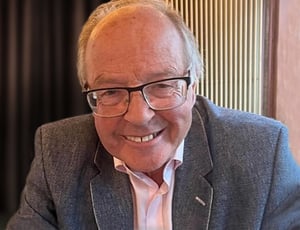

Questions
No. The recording is free for anyone to watch. Registering is only for the live sessions, where you can join the discussion.
Yes, please do. Send the link to anyone who'd find it useful, they don't need to register to watch.
No. The sessions are about the practice of stakeholder engagement, not the product. There's one short, clearly flagged mention of Tractivity in each session.
Monday 2 November 2026, 1pm to 1.50pm UK time: Managing difficult stakeholder relationships. It's free and online.
A free monthly webinar series for people who do stakeholder engagement, running from October 2026 to March 2027. Rhion Jones, the Consultation Guru, leads each session and Vicky Adamson chairs. Each session stands on its own, and the series grew out of The Stakeholder Engagement Day, Tractivity's annual in-person event.
Next session
Managing difficult stakeholder relationships. Monday 2 November 2026, 1pm to 1.50pm UK time, free and online. You'll leave with techniques you can use in your next difficult conversation.
Rhion's article
Are We All Stakeholder Managers Now? The piece that set up this session: the careers, the job titles, and why engagement and management aren't the same thing.
Ask the Guru
Rhion's short films on the questions practitioners are asking now, free to watch, no form in the way.