



UK public consultation software for local authorities
Local authorities running consultations use three kinds of digital tool, and most need more than one. Survey tools collect responses. Consultation portals publish it and take submissions. Stakeholder relationship management platforms hold the record behind both: who you consulted, when, how, what they said and what you did. Tractivity, the UK stakeholder relationship management (SRM) platform, is the third.
That distinction matters, because the part councils get challenged on is rarely the survey. It's the record.
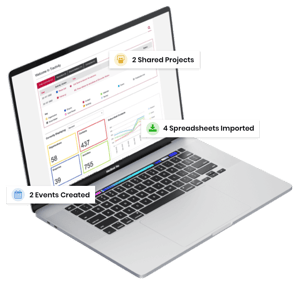
What digital solutions help councils manage public consultations?
- Survey and form tools collect structured responses. They're quick to stand up and fine for a single question set. They don't hold a stakeholder history, and they don't tell you that the resident objecting to a Local Plan allocation also objected to a licensing decision two years ago.
- Consultation portals publish consultations, accept submissions, and often handle statutory notifications. They're built around the consultation as the unit of work, so when the consultation closes, the record tends to close with it.
- SRM platforms hold the stakeholder as the unit of work. Every interaction across every consultation, service change and planning decision sits against the person or organisation it involved, with a date-stamped audit trail that survives the consultation closing, the officer leaving and the administration changing.
Most councils end up combining a portal or survey tool with an SRM platform. MHCLG's digital community engagement toolkit for planning consultations and its guidance on using community engagement platforms are the sector's reference points for choosing between them.
If you're weighing up specific products, we compare the main UK options and set out the criteria that matter most.
Why councils outgrow spreadsheets for consultation responses
Most councils arrive at this question from a fourth starting point: a spreadsheet. The teams running them don't have a capacity problem; they have an evidence problem.
A spreadsheet is uncontrolled by default. Responses can be edited or deleted without trace, and there's no record of who changed what. Research by Professor Ray Panko at the University of Hawaii found that 94% of the spreadsheets audited contained at least one error. That is not a comfortable position to be in when a decision goes to judicial review.
There's a data protection problem too. Consultation responses are personal data, and every respondent has rights under UK GDPR. Tractivity tracks each consent decision, opt-in and opt-out automatically, enforces restrictions, holds data in the UK by default and lets you action a subject access or deletion request from within the system.
Transport for the South East, the sub-national transport body covering 16 local transport authorities, moved from spreadsheets to Tractivity for its 3,000+ stakeholder contacts and reports spending less than a quarter of the time on stakeholder management it spent before.
What Tractivity does for local authority consultation teams
Tractivity brings every consultation, stakeholder and response into one place.
One record across every consultation
Tractivity holds stakeholders, organisations and their affiliations once, then uses them across every consultation and project. The same parish council, ward member, developer or residents' association turns up in a Local Plan consultation, a licensing review and a highways scheme, engaged by three different teams. One record means three teams see the same history.
Planning consultations at any scale
From Regulation 18 and 19 Local Plan consultations through to Nationally Significant Infrastructure Projects examined by the Planning Inspectorate. Anglian Water runs the Cambridge Wastewater Treatment Plant Relocation, an NSIP, with more than 13,000 stakeholders tracked in Tractivity. GOV.UK's guidance on engaging the public when preparing a local plan sets the expectations this has to meet.
Every interaction logged against the stakeholder
Emails, meetings, calls, survey responses, event attendance, mailshots, document attachments and written submissions, all recorded against the stakeholder they relate to. Inbound email syncs automatically, so replies land on the record without anyone filing them.
Evidence that meets the Gunning Principles
The Gunning Principles set the legal test for fair consultation in England and Wales: consult at a formative stage, give enough information for intelligent consideration, allow adequate time, and conscientiously take responses into account. The Cabinet Office's consultation principles sit alongside them. Tractivity evidences each stage with date-stamped records and exportable reports, so when a decision is challenged the answer to 'show us' is a report, not an archaeology project.
Political and member data that stays current
Political stakeholder data updated nightly, covering local councillors, MPs and ministers, keeps your elected representative records current without manual upkeep.
Reporting that produces the committee paper
150+ pre-built reports plus configurable dashboards, in tabular, matrix, graph, demographic and mapping views. AI Sentiment and AI Summarise turn a few thousand free-text responses into something an officer can brief on. Both run inside Tractivity's own Microsoft Azure UK South environment, and customer data is never used to train models.
GDPR compliant by design
Every opt-in and unsubscribe is tracked automatically, restrictions enforced and consent records held. UK data residency by default (Microsoft Azure UK South region).
How stakeholders are contacted
Communications go out by email, mailshot, survey invitation, event invitation and in-platform notification. Tractivity doesn't send SMS.
Which accreditations should a council check before procuring?
Procurement and IT will ask for these before anyone asks about features.
- ISO 27001:2022, the current information security standard, not the superseded 2013 version
- Cyber Essentials Plus, NCSC-backed and hands-on audited, required for many public-sector contracts
- NHS Data Security and Protection Toolkit, annually audited, relevant for joint work with health partners
- G-Cloud 14, Crown Commercial Service, so you can call off the framework without a full tender
- Microsoft Azure hosting, UK South region, SOC 2 compliant
- GDPR compliant by design, encrypted at rest and in transit
- Microsoft Azure UK South hosting by default, SOC 2 compliant, with EEA, US and other regions available
- Annual independent penetration testing by a CREST-approved organisation
- WCAG 2.2 Level A today, Level AA during 2026
- Welsh language support for authorities under Welsh Language Standards
- Achilles UVDB Silver Plus membership

Who uses Tractivity across UK government
Tractivity has supported UK public bodies for 20+ years, with 112+ named client organisations across the public and private sectors. In government that includes the Welsh Government, HM Treasury, the Department for Transport, Companies House, Ofsted, Social Security Scotland, the Promise Scotland and The Executive Office in Northern Ireland, alongside NHS trusts and integrated care boards.


What does public consultation software cost?
Tractivity's SRM platform is from £9,495 per year for the base licence, plus £500 per additional user. There are no caps on stakeholder records, consultations, communications sent or engagements captured, and no setup fees. The Engage-360 public portal, which lets residents self-register and respond directly, is a separately priced module, configured to the scale of your programme.
Because Tractivity is on G-Cloud 14 you can call it off the framework rather than running a full tender. Implementation takes four to six weeks on average from contract signed to launch, covering planning calls, configuration, data import and training sessions with a dedicated UK-based Client Success Manager. How long it actually takes depends as much on how quickly your data arrives as on us.
Frequently asked questions
Yes, at any scale, from Regulation 18 and 19 Local Plan consultations to Nationally Significant Infrastructure Projects examined by the Planning Inspectorate. Anglian Water uses Tractivity for the Cambridge Wastewater Treatment Plant Relocation, an NSIP with more than 13,000 stakeholders tracked in the system.
Yes, through Engage-360, the branded public portal where residents self-register, respond to surveys and take part in consultations. Engage-360 is a separately priced module. Without it, Tractivity works alongside your existing portal or survey tool, capturing responses into one audited record.
Yes. Tractivity is listed on the UK G-Cloud Framework (Crown Commercial Service), so local authorities and other public bodies can procure it without running a full tender exercise.
Every consent decision, opt-in, and opt-out is tracked automatically against the relevant stakeholder record. Data is held in UK-hosted Microsoft Azure infrastructure, encrypted at rest and in transit. A subject access request or deletion request can be executed directly from the system.
Four to six weeks on average from contract signed to live launch, covering planning calls, system configuration, data import and two 1.5-hour training sessions with your dedicated UK-based Client Success Manager. It is an average rather than a guarantee, and how long it takes depends as much on how quickly you can supply the data to load as on us.
Councils typically combine a consultation portal or survey tool with a stakeholder relationship management platform. The portal publishes the consultation and takes responses; the SRM platform holds the stakeholder record, the interaction history and the audit trail behind it. Tractivity is the SRM platform, used by Norfolk County Council, the Welsh Government and other UK public bodies.
Every interaction is date-stamped and logged against the stakeholder, so you can evidence that you consulted at a formative stage, gave adequate information and time, and took responses into account. Exportable reports produce that evidence for a planning inspector, a scrutiny committee, an FOI response or a judicial review bundle.